The story
The night of 16–17 July 1918
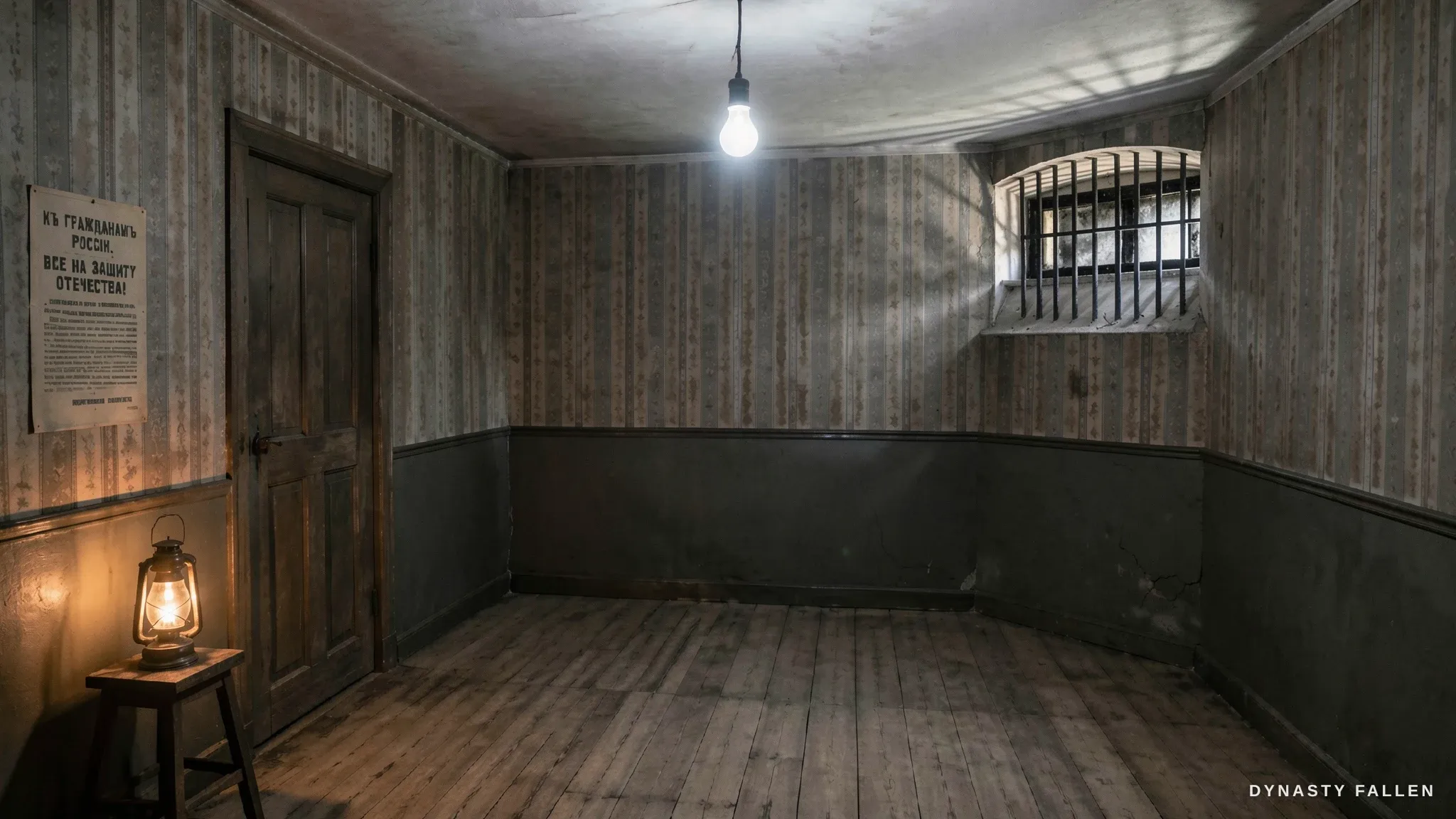
The Ipatiev House, Yekaterinburg
A murdered girl, resurrected as a fairy tale
Grand Duchess Anastasia Nikolaevna Romanova (1901–1918) was the youngest daughter of Tsar Nicholas II — “Emperor and Autocrat of All the Russias” — and Empress Alexandra. She was the family clown, nicknamed Shvybzik (“imp”); she and her three sisters, Olga, Tatiana, and Maria, signed their letters collectively as OTMA. Her younger brother Alexei, the heir, carried a haemophilia kept as a state secret — the hidden wound that drew Rasputin to court and helped rot the throne’s legitimacy. The First World War broke the dynasty: military catastrophe, Rasputin’s murder, the February Revolution, and Nicholas’s abdication in March 1917. The family passed from palace house-arrest to Tobolsk and then to the Ipatiev House in Yekaterinburg, which the Bolsheviks called, with bureaucratic calm, the House of Special Purpose.
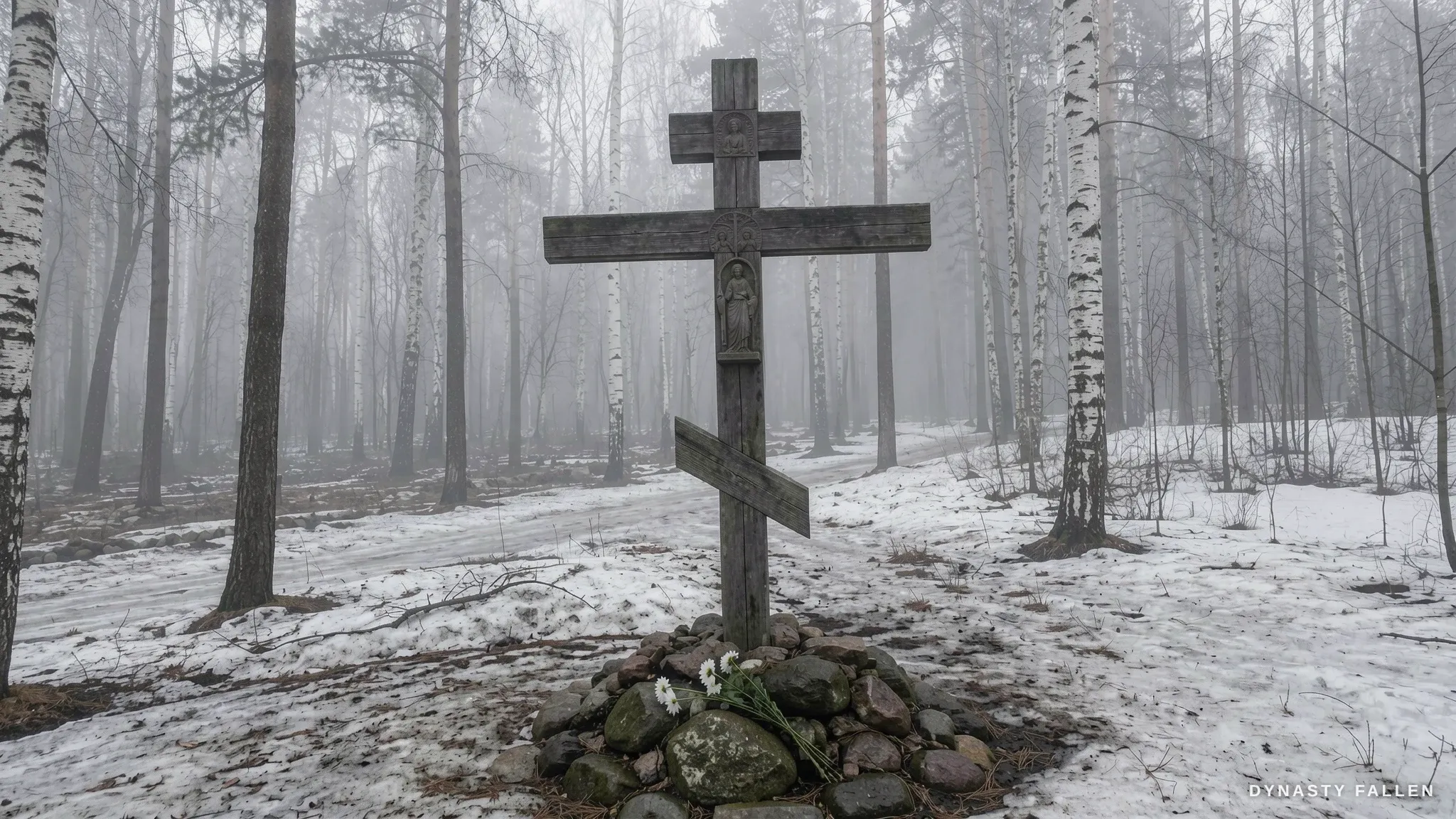
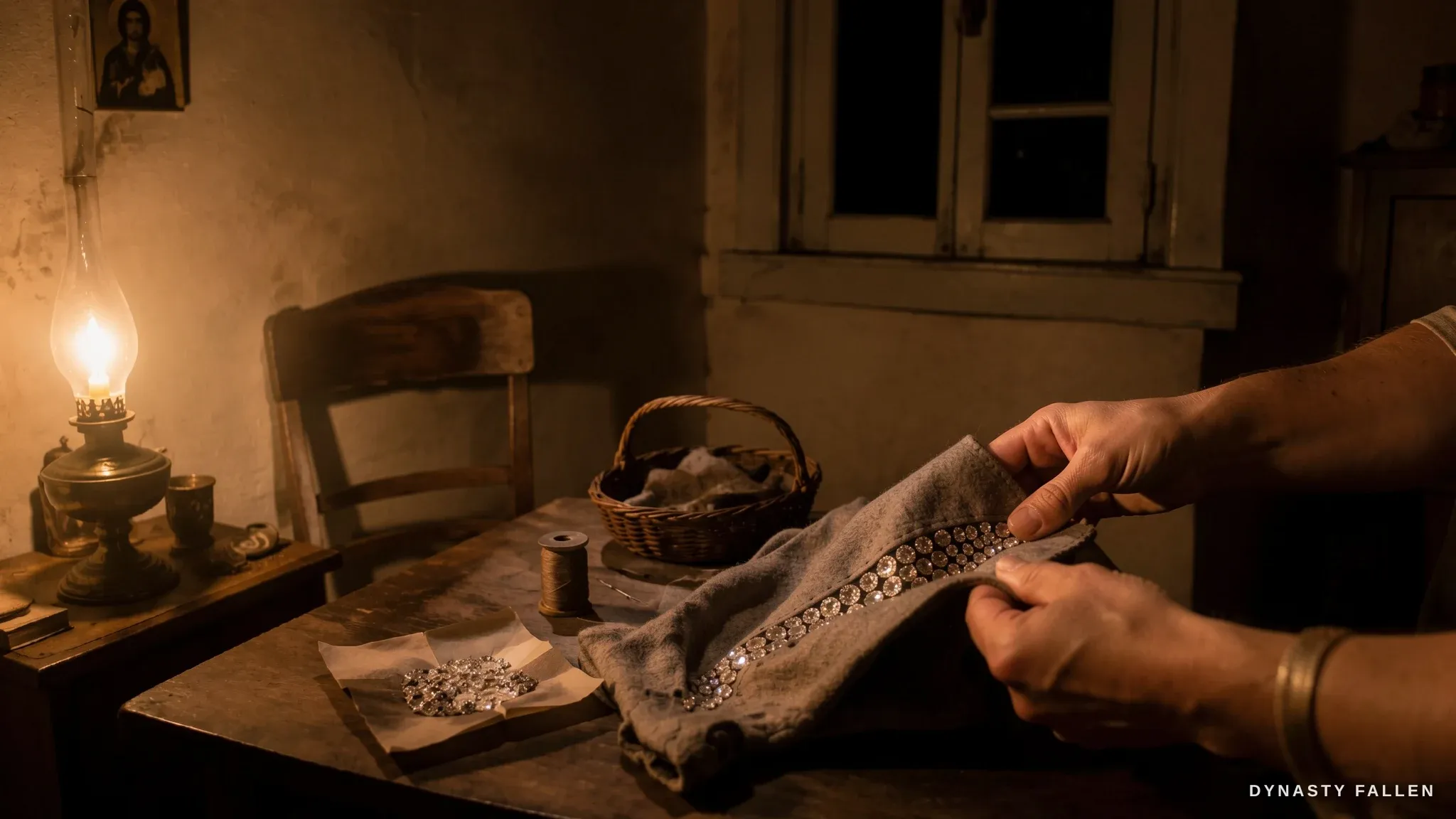
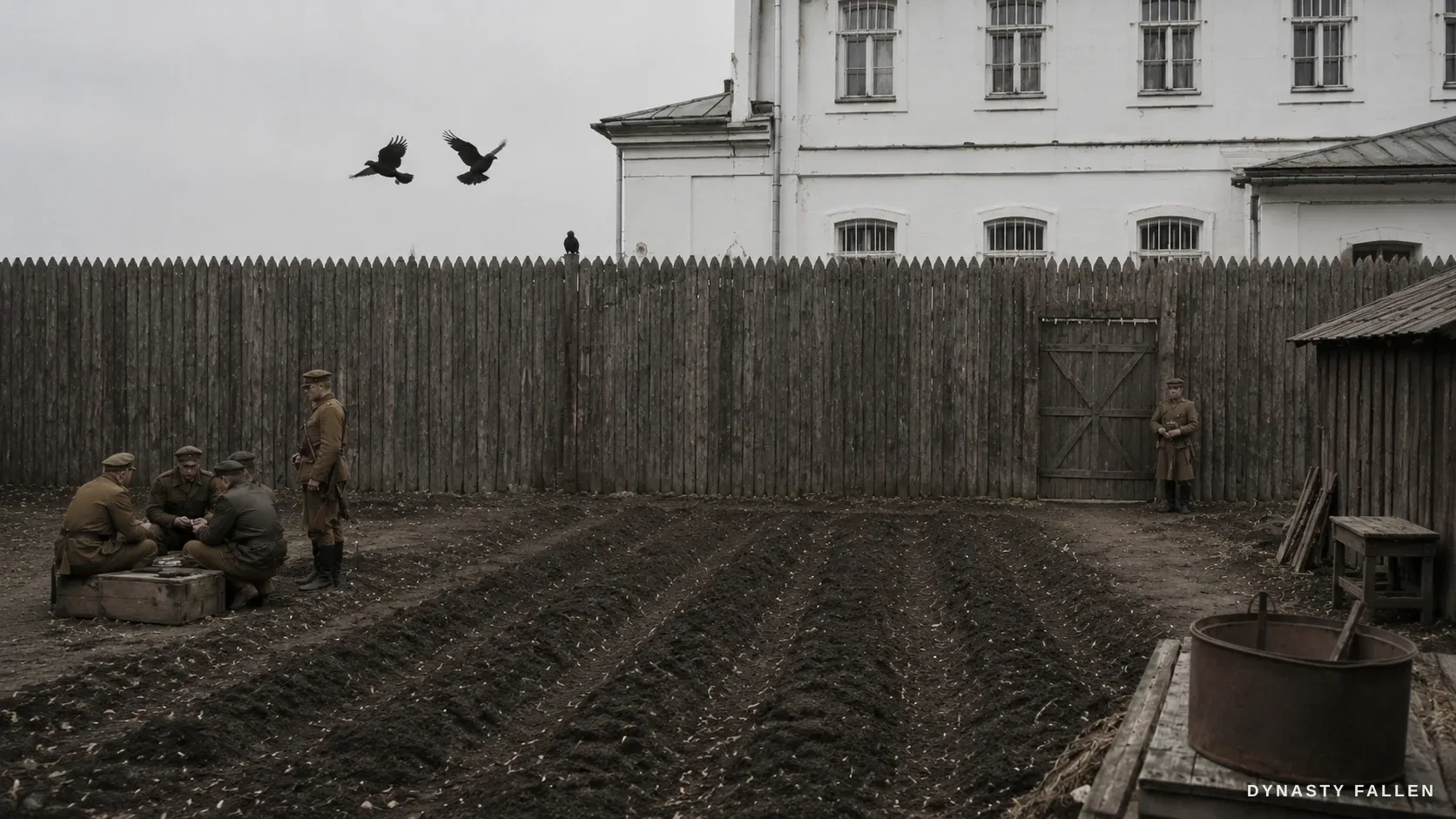
On the night of 16–17 July 1918, eleven captives — the seven Romanovs and four retainers — were led to a basement room “for a photograph.” A death sentence was read; a squad opened fire. The killing did not go cleanly: the empress and her daughters had sewn diamonds and jewels into their corsets and bodice linings, and the gems acted as crude armour — bullets deflected, and the girls survived the first volley. The squad finished them with bayonets and point-blank shots. The bodies were stripped, doused in sulphuric acid, and pit-buried in the Koptyaki forest, two of the children burned and buried separately. Because two bodies were missing from the main grave, a survival legend grew — that Anastasia had escaped.
The legend outlived the evidence by decades. Dozens of impostors appeared; the famous one, Anna Anderson, was championed for over fifty years and proven by DNA, in 1994, to be Franziska Schanzkowska, a missing Polish factory worker. The main grave was found in 1979 and exhumed in 1991; the two missing children were found in 2007 and DNA-confirmed in 2008 — proving that none of the four daughters survived. The mystery was scientifically closed. The fairy tale was not: Anastasia (1956) won Ingrid Bergman an Oscar for dignifying the impostor’s story, and Anastasia (1997) resurrected the murdered girl as an amnesiac princess chased by an undead sorcerer Rasputin — an animated musical made after DNA had begun closing the case.
The album takes the documented record over the cartoon. Her Greek name means resurrection — and that is exactly what the world did to her: not the girl, but the lie rose. Vol. XI commits to that frame across nine tracks: the gilded house with the rot inside it, the move east to the House of Special Purpose, the cellar and the jewels that only made the dying slower, the forest that kept the secret, the woman who said she was her, the fairy tale of her murder, and the DNA that finally let a seventeen-year-old girl stay dead. The thesis — they made a fairy tale of my murder — is the album’s spine, and the name-irony its secret engine: every impostor and every cartoon was the world trying to make “Anastasia” come true. The album’s answer is that the girl stayed dead, and only the lie rose.
Album in active production. 10 of 10 tracks released.