Truth, Saga
& Legend
What’s documented, what’s tradition, what’s storyteller’s flourish.
An annotated history of Anastasia.
The premise
Anastasia is the rarest kind of Dynasty Fallen subject: the myth to break is not an ancient chronicler's bias but a living-memory falsification. The documented record here is unusually firm — an execution attested by its own perpetrators, a forensic case closed by DNA, an impostor unmasked in a laboratory. What contests it is not a rival source tradition but a survival legend, a celebrated fraud, and an Oscar-winning film, an animated musical, and a string of screen treatments that resurrected a murdered child long after the science had buried her. This page tells you which parts are documented, which rest on the killers' own contradictory accounts, and which are pure invention — propaganda, wishful thinking, and Hollywood.
The spine of the documented record is, unusually, the testimony of the murderers. The principal narrative source for the night of 16–17 July 1918 is the account of Yakov Yurovsky, the Cheka officer who commanded the squad — his 1922 note, his 1934 speech to Old Bolsheviks, and a handful of corroborating statements from men who were in the room. These are first-hand and detailed, and they agree on the load-bearing facts (the basement, the read sentence, the volley, the jewels, the bayonets, the burial). They are also self-serving, mutually contradictory on the choreography, and written by men with reasons to shape the story. Use them for what happened; hold the exact words and sequencing loosely.
Against the killers' testimony stands the forensic record, which is the closest thing this story has to an impartial witness. The main grave in the Koptyaki forest was located by amateurs in 1979 and officially exhumed in 1991; the remains of Nicholas, Alexandra, and three daughters were DNA-identified through the 1990s. A second grave roughly seventy metres away, found in 2007, yielded the last two children — the Tsarevich Alexei and a sister — confirmed by DNA in 2008. The forensic case is what closes the survival legend: all four daughters died in the cellar. There is no missing Anastasia.
The third register is the lie itself, and it is a documented historical phenomenon in its own right. Dozens of impostors claimed to be Anastasia; the famous one, Anna Anderson, was championed for over fifty years and proven by DNA in 1994 to be Franziska Schanzkowska, a missing Polish factory worker. The screen treatments are the lie's afterlife: Anastasia (1956, Ingrid Bergman, Best Actress), Anastasia (1997, the Fox animation with Rasputin as an undead sorcerer), and the modern stagings — The King's Man (2021), The Last Czars (2019), The Crown (2022) — each of which resurrects her, tidies the killing, or lectures over it.
Verdicts below: Documented · From the sources · Legend & flourish.
Documented
What multiple independent sources agree on.The whole family was murdered in the cellar of the Ipatiev House on the night of 16–17 July 1918.
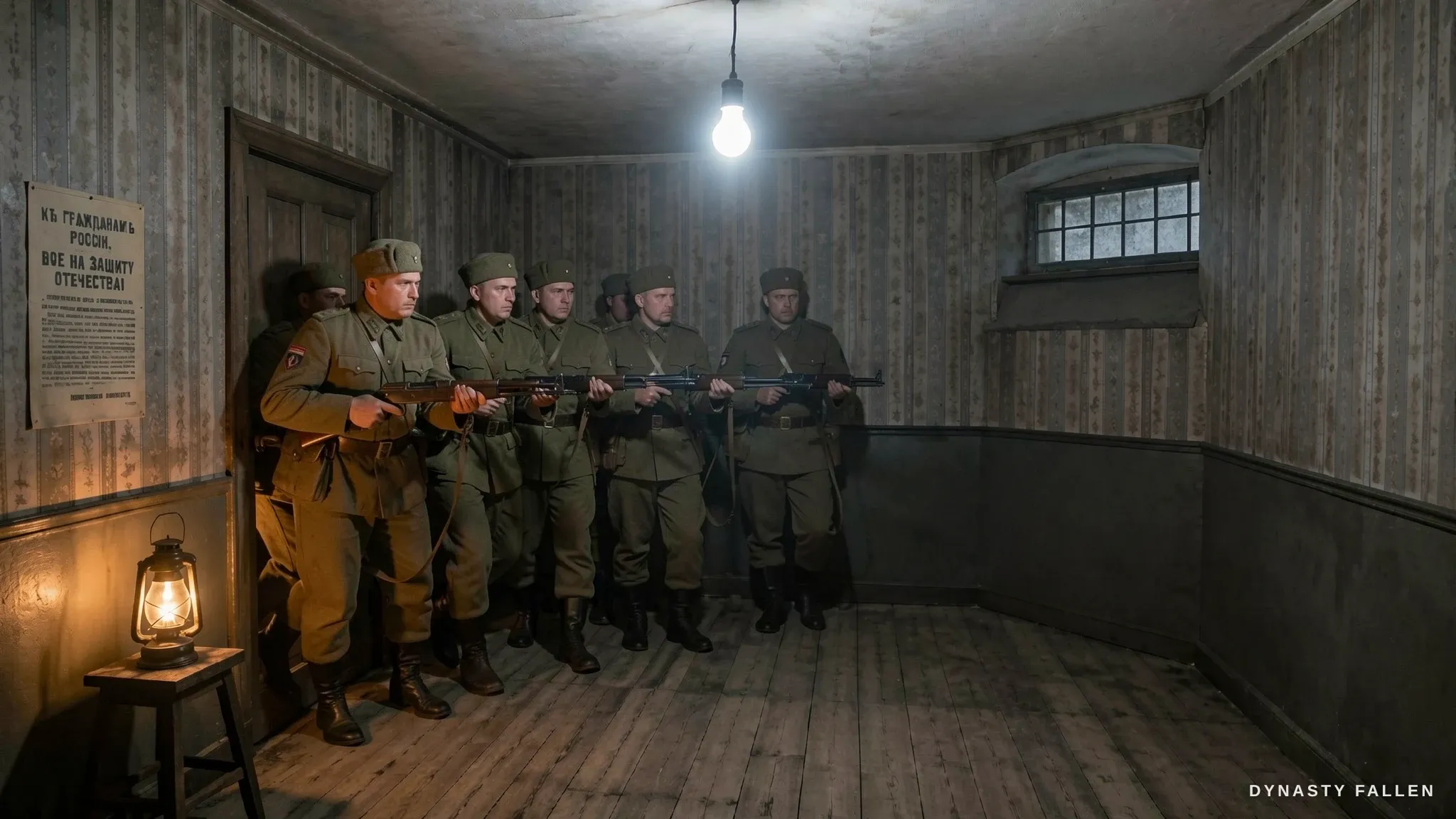
This is the album’s bedrock, and it is about as well-documented as a secret political murder can be. The commander of the squad, Yakov Yurovsky, left two first-hand accounts (a 1922 note and a 1934 speech to Old Bolsheviks); several of the men in the room left corroborating statements; the White Army’s Sokolov investigation in 1919–24 reconstructed the killing and the disposal site; and the physical remains were recovered and DNA-identified in the 1990s and 2000s. The sources disagree on the choreography — who fired first, who killed whom — but they agree without exception on the central facts.
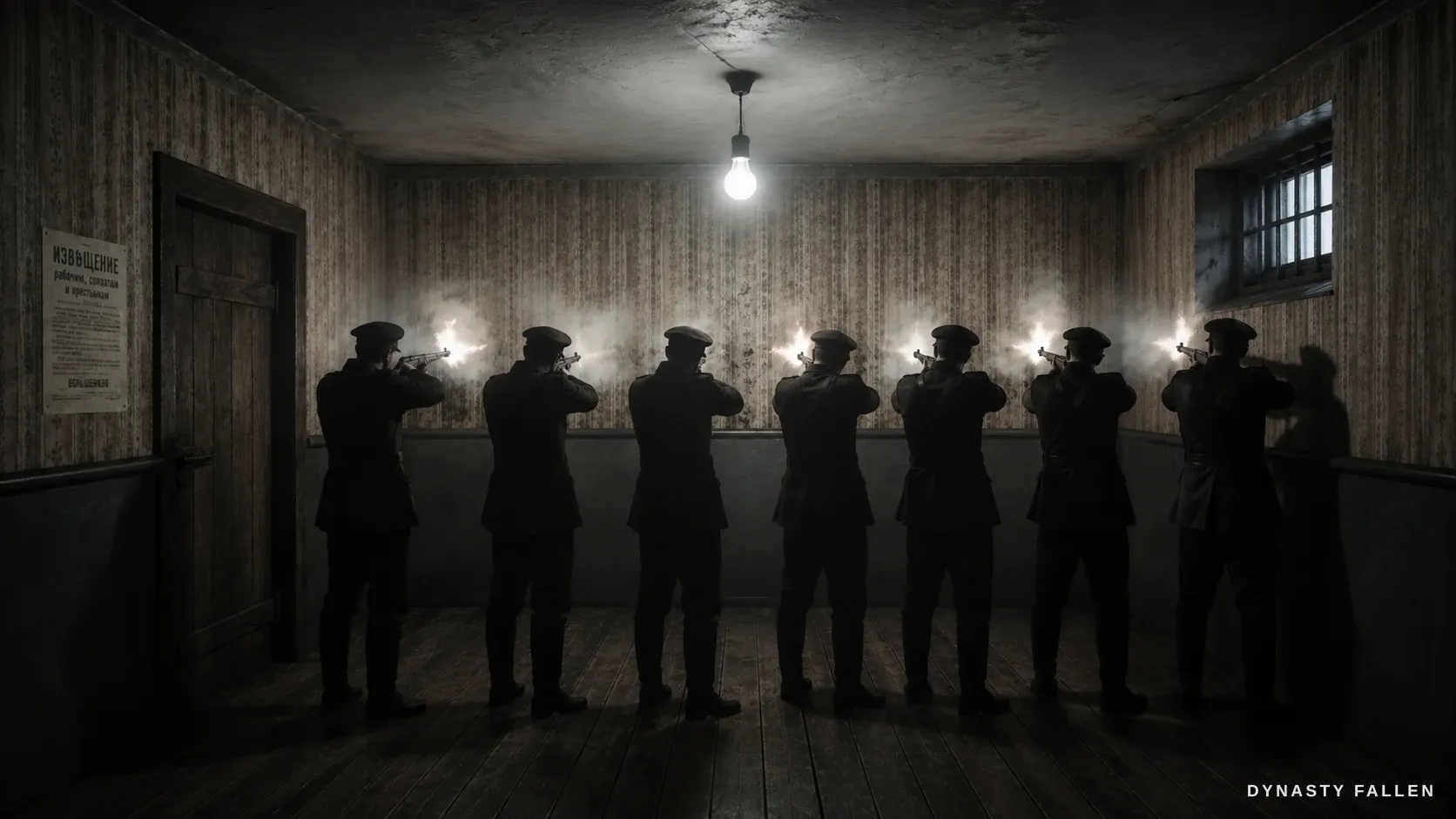
Eleven people were taken to a basement room of the Ipatiev House on the pretext of a photograph: Nicholas, Alexandra, their five children, and four retainers (the doctor Botkin, the maid Demidova, the cook Kharitonov, and the footman Trupp). A death sentence was read aloud. A squad of roughly eleven men opened fire. The killing was prolonged and chaotic, finished with bayonets and point-blank shots, and the bodies were removed before dawn and disposed of in the Koptyaki forest.
The album treats this as the load-bearing fact it is. Everything else on this page — the survival legend, the impostors, the films — is downstream of the world’s reluctance to accept that this happened to all of them, including the seventeen-year-old.
The daughters had jewels sewn into their corsets, which deflected the first volley and made the killing long.
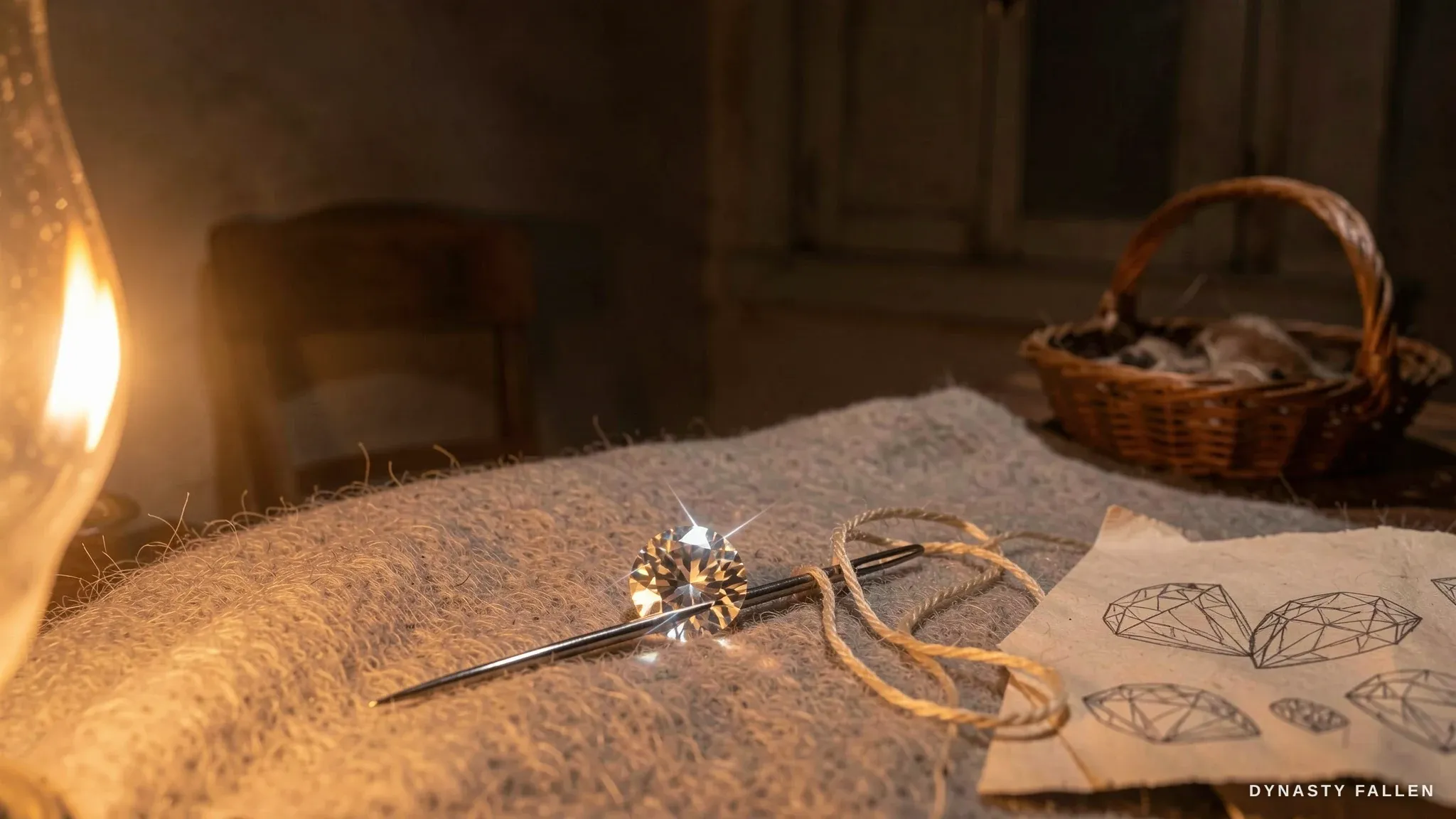
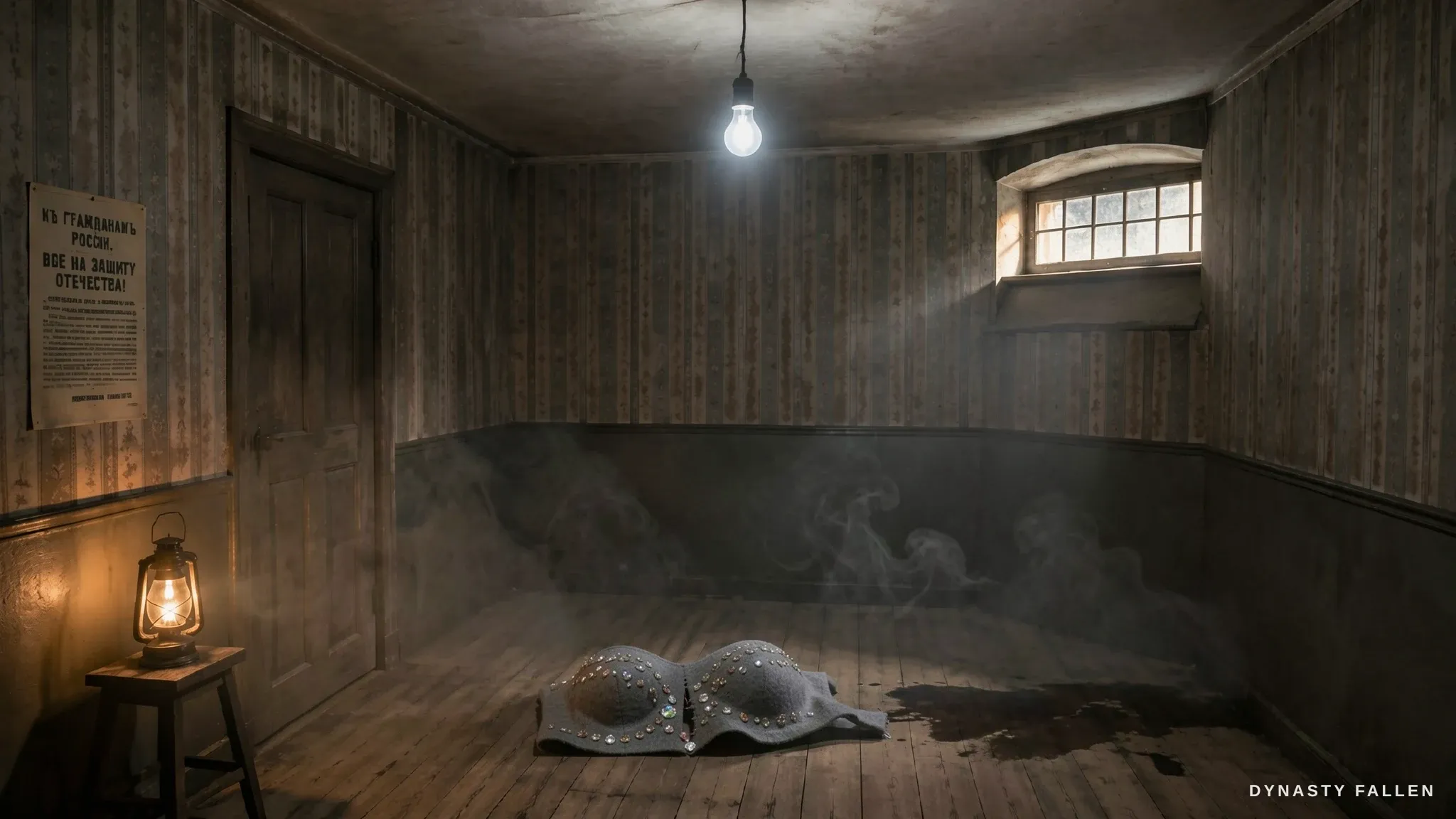
This is the album’s central image, and it is documented by the men who did the killing. Over the months of captivity the empress and her daughters had sewn diamonds and jewels — by later estimates well over a kilogram of stones — into their corsets and bodice linings, hiding the family’s portable wealth against an uncertain future. In the cellar the gems acted as crude armour: the first volley struck the girls and the bullets deflected, and the daughters survived the opening fire. Yurovsky’s own account describes the squad’s confusion as the rounds appeared to bounce off the women; the killing then turned ugly and protracted, finished with bayonets and point-blank shots to the head.
The detail is not legend dressed up as fact. It comes directly from the perpetrators’ testimony and is consistent with the forensic record — the second grave and the condition of the remains. It is the rare case where the killers and the bones tell the same story.
It is also exactly the part the screen versions cannot bear to show. The King’s Man (2021) compresses the entire massacre into a single clean burst from one gunman posing as a photographer — no jewels, no deflection, no long dying. The album does the opposite: it stands inside the twenty-minute room from the girls’ side, where the armour sewn from a dead empire’s wealth only made the dying slower. The horror and the irony are the same object.
The bodies were stripped, doused in sulphuric acid, and buried in the Koptyaki forest — two children apart.
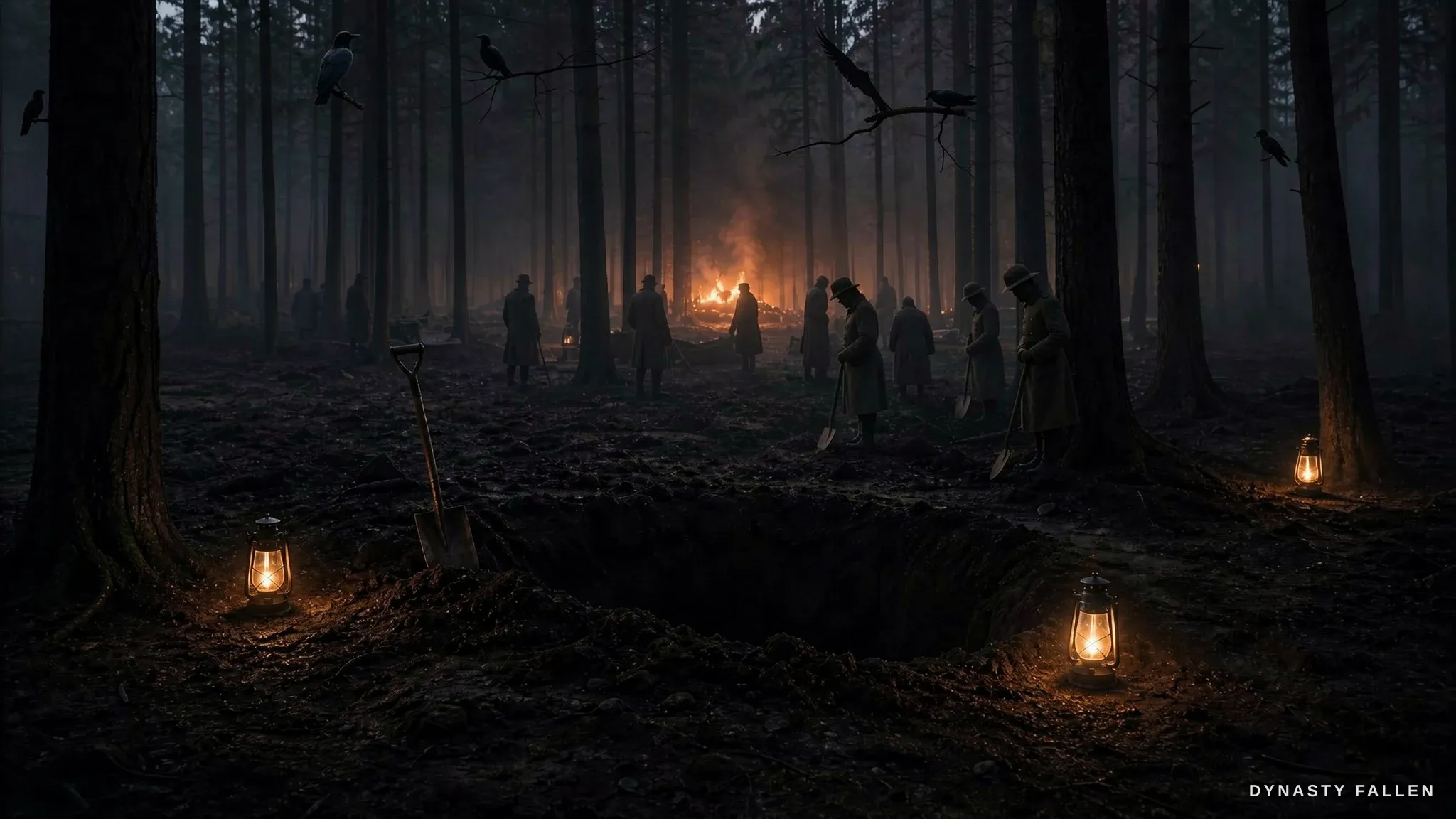
The disposal is documented by the squad and confirmed twice by the ground. After the killing the bodies were taken into the Koptyaki forest north of Yekaterinburg, stripped (which is when the sewn-in jewels were discovered), and the first attempt to hide them in a mine shaft failed. Yurovsky’s account describes the second, hurried disposal: most of the bodies doused in sulphuric acid and pit-buried under a roadway, with two of the children — the Tsarevich Alexei and one sister — burned and buried separately a short distance away, specifically so that any later count of the grave would not add up to the whole family.
That deliberate separation is the seed of the entire survival legend. The Sokolov investigation in 1919 found the site but not the bodies; the main grave was located by amateur investigators in 1979 and officially exhumed in 1991, yielding nine of the eleven victims. The two missing children were not found until 2007, seventy metres away, exactly where the killers said they would be.
The album’s Act III turns on this: the forest kept the secret for sixty years, and the gap it left — two missing bodies — was the empty space the fairy tale rushed in to fill.
Anastasia did not survive. All four daughters died in the cellar.
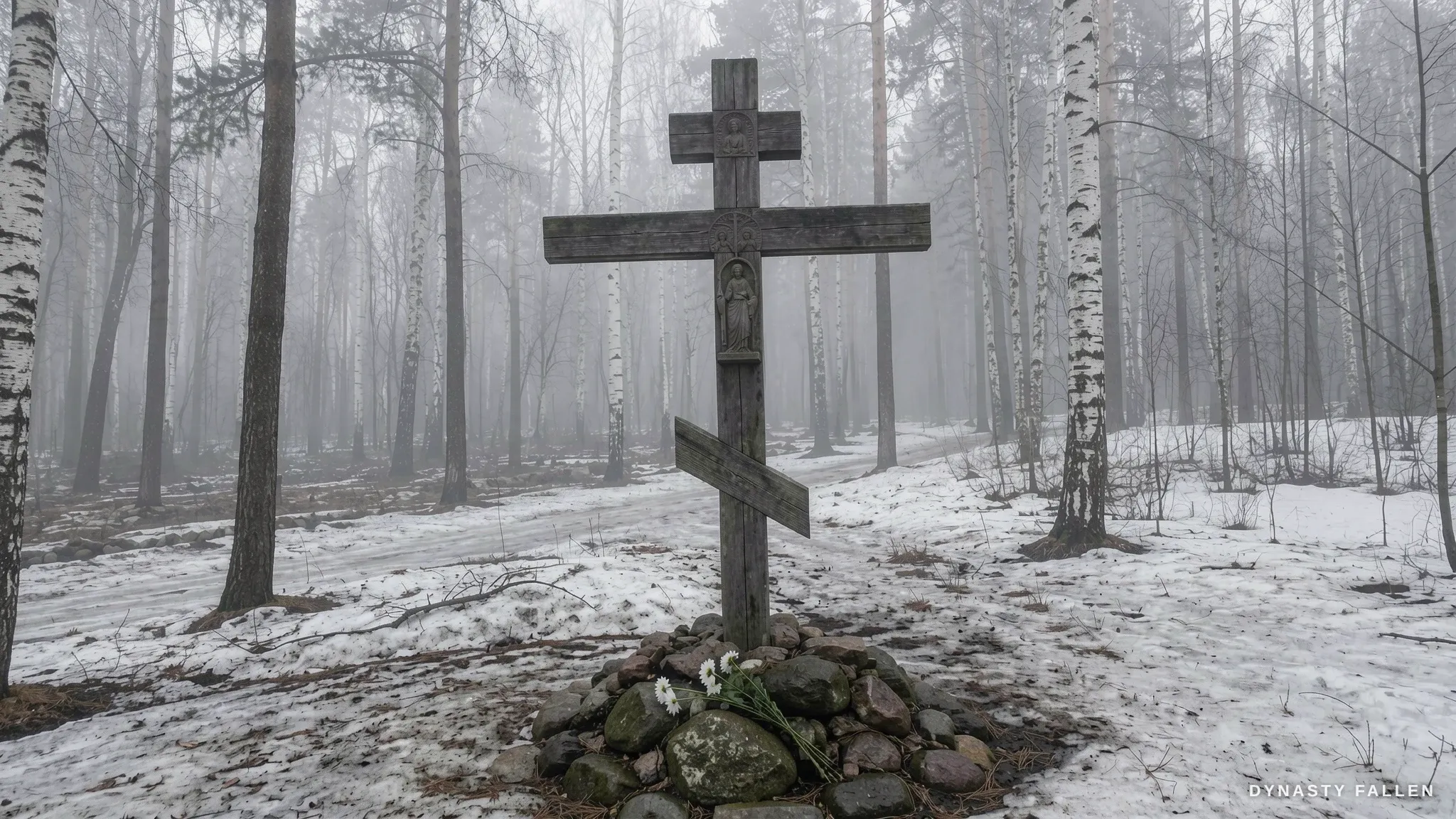
This is the claim the whole album is built to defend, and it is no longer in any serious doubt. The survival legend rested entirely on the fact that two bodies were missing from the main grave exhumed in 1991 — leaving room to argue that Anastasia (or Maria) had escaped. Forensic anthropologists even disagreed over which sister was absent. That argument died in the summer of 2007, when a second grave roughly seventy metres from the first yielded the burned remains of two more young Romanovs.
In 2008, Russian and international laboratories confirmed by DNA that the second grave held the Tsarevich Alexei and a sister, completing the family. The peer-reviewed analysis published in 2009 demonstrated that all of Nicholas and Alexandra’s children were accounted for: there is no missing daughter, no survivor, no escape. Whether the recovered sister is formally labelled Maria or Anastasia is a question of which body lay in which grave; the dispositive fact is that all four daughters are dead, and have been since July 1918.
The album takes this as settled. Vol. XI is not an open mystery with a romantic possibility left ajar — it is the story of a girl who was murdered, and of the ninety years it took the world to let the science say so.
Anna Anderson, the famous claimant, was proven by DNA to be a Polish factory worker.
Anna Anderson was the most celebrated of the dozens of Anastasia claimants — championed for over fifty years, the subject of court cases, books, and films, and believed by a surprising number of émigrés and minor royals. She first appeared in Berlin in 1920 after a suicide attempt, claimed to be the surviving grand duchess, and held to the story until her death in 1984.
The claim was settled in a laboratory. In 1994 the British Forensic Science Service analysed mitochondrial DNA from a preserved tissue sample taken during a 1979 operation, and compared it both to the Romanov line (via living maternal relatives, including Prince Philip) and to the family of Franziska Schanzkowska, a Polish factory worker who had gone missing in Berlin in 1920. Anderson’s mtDNA did not match the Romanovs at all. It matched a Schanzkowska relative, Karl Maucher, with the testing returning an overwhelming likelihood that Anna Anderson was Franziska Schanzkowska.
The album gives this its own track — the woman who said she was her. The point is not contempt for the impostor but the theft itself: for half a century someone else wore a murdered girl’s death, and it took DNA to give it back.
Her name means "resurrection."
This one is simply true, and it is the album’s secret engine. Anastasia derives from the Greek anastasis (ἀνάστασις), meaning “resurrection” or “rising again” — the same word used in Christian theology for the resurrection of the dead. It was a common name in the Orthodox world for exactly that reason, carried by saints and royalty alike; there is nothing mystical in the grand duchess having borne it.
What is uncanny is what history then did with it. The one Romanov daughter whose name means “she who rises” became the one the world refused to let stay dead — resurrected for ninety years as an impostor’s claim, a courtroom cause, and an animated musical. The name did not predict this; the coincidence is just a coincidence. But it gives the album its cruelest irony, and Vol. XI builds its frame on it: the world spent a century trying to make the name come true, and the only thing that ever rose was the lie.
The thesis spine of the record — they named me resurrection; the only thing that rose was the lie — plants this in the opening track’s bridge and reclaims it in the closer.
The man who led the killing wrote down exactly how he did it.
The single strangest fact about this murder is that its organiser documented it himself. Yakov Yurovsky, the man who commanded the squad in the cellar, dictated a detailed account of the killing and the disposal of the bodies to the historian Mikhail Pokrovsky around 1920; the surviving copy is dated 1922. It is a cold, procedural document — the count, the room, the sentence, the volley, the botched burial. It was not written as a confession in any moral sense. It was written for the state’s own archive, by a man who assumed he had nothing to answer for.
He did not treat it as a secret either. In February 1934 he read essentially the same account aloud to a gathering of Old Bolsheviks in Sverdlovsk — the city that had been Yekaterinburg — recounting the regicide sixteen years on to an audience of fellow revolutionaries, with no apparent fear of consequence.
The Note’s afterlife is the part the album cares about. Yurovsky’s son handed the memoirs to the amateur investigators Alexander Avdonin and Geli Ryabov in 1978, and the directions preserved in them are what led to the grave: the burial site was located in 1979 and exhumed in 1991. The killer’s own hand is what eventually dug up the truth he had spent his life being rewarded for burying. That inversion — the confession that convicts him to history, and to no court — is the whole argument of No One Was Ever Tried.
No one was ever tried for the murder of the Romanov family.
Not one participant in the killing was ever charged with it. Not in Soviet Russia, where the men who did it were state servants carrying out state policy, and not afterwards, by which time they were all dead. This is not a case where the truth was unknown and justice was therefore impossible. The truth was written down (see the Yurovsky note) and, within the Party, told aloud. There was simply never a court.
There were investigations. The White Army’s Nikolai Sokolov reconstructed the crime scene and the disposal in 1919 with real forensic rigour, but he was working for a side that lost, in a jurisdiction that evaporated beneath him; he died in France in 1924 with his evidence and no trial. Russia opened a formal criminal investigation in 1993 after the main grave was found, and reopened it in 2015 — but that case existed to identify and bury remains, not to prosecute anyone. Every perpetrator had been dead for decades.
So the record contains a confession, a reconstructed crime scene, forensic identification of every victim, and no verdict. The album’s title is not a rhetorical flourish. It is the flattest available statement of the historical fact: there was a confession; there was never a trial.
The killer was rewarded for it, and died in his own bed.
Far from being disowned, the man who organised the killing was treated as a loyal servant of the state for the rest of his life. Yurovsky headed the Yekaterinburg Cheka in 1919, worked in the Rabkrin, was made Chief of the Gold Department of the Soviet State Treasury from 1921 — placed in charge of the state’s gold, by the state whose founding act of consolidation he had carried out in a cellar — and from 1930 directed the Polytechnical Museum in Moscow.
He died on 2 August 1938, of a perforated ulcer, in a hospital bed, aged about sixty. There is a long-standing claim that he was poisoned by the NKVD (see the note on his death and the 1934 address), but the documented cause is illness and the documented shape of his life is a career.
This is the fact the song is built on, and it is the one people find hardest to sit with. The murder of five children was not a crime the Soviet state was embarrassed by and quietly buried; it was a service it rewarded, in gold and in office, for eighteen more years. The album’s chorus makes the trade explicit — you buried me in a forest and they gave you the gold — and the trade is not a metaphor.
The Soviet state denied the murders for eight years.
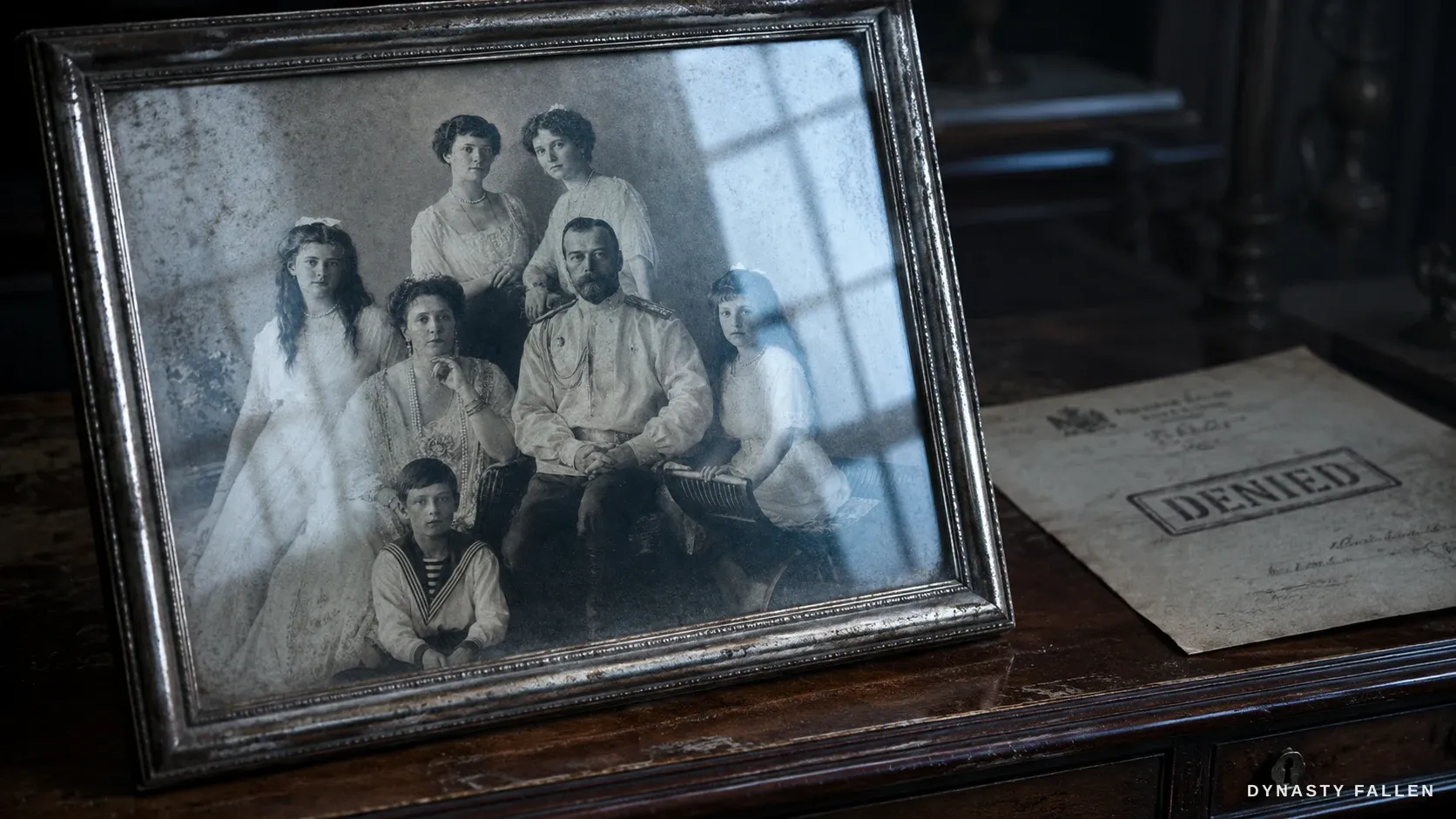
The killing was announced only in part and then actively lied about. The Soviet government initially acknowledged the execution of Nicholas alone, while the fate of Alexandra and the children was left deliberately vague — they had been “moved to a place of safety.” What followed was roughly eight years of shifting disinformation: the deaths were blamed on rogue left-wing revolutionaries acting without authority; in 1922 the deaths of the family were denied outright; only in 1926 did the state acknowledge that they had been killed.
Hold that against the previous claims and the shape of the thing is clear. During those same eight years the man who ran the killing had already dictated a detailed account of it to a Party historian, and was being promoted. The confession and the denial existed simultaneously — one for the archive, one for the world.
That gap is where the survival legend grew. If the state itself would not say plainly that the children were dead, the space for “what if she got out?” was not created by dreamers; it was manufactured, and then rented out for ninety years to impostors and screenwriters. The album’s argument is that the fairy tale needed the lie first: before the world could romanticise the murder, the state had to refuse to call it one.
From the sources
Mostly the killers' own accounts. Plausible, vivid, but self-serving and contradictory.The exact choreography of the cellar — who fired, the order of the deaths, the girls' final cry.
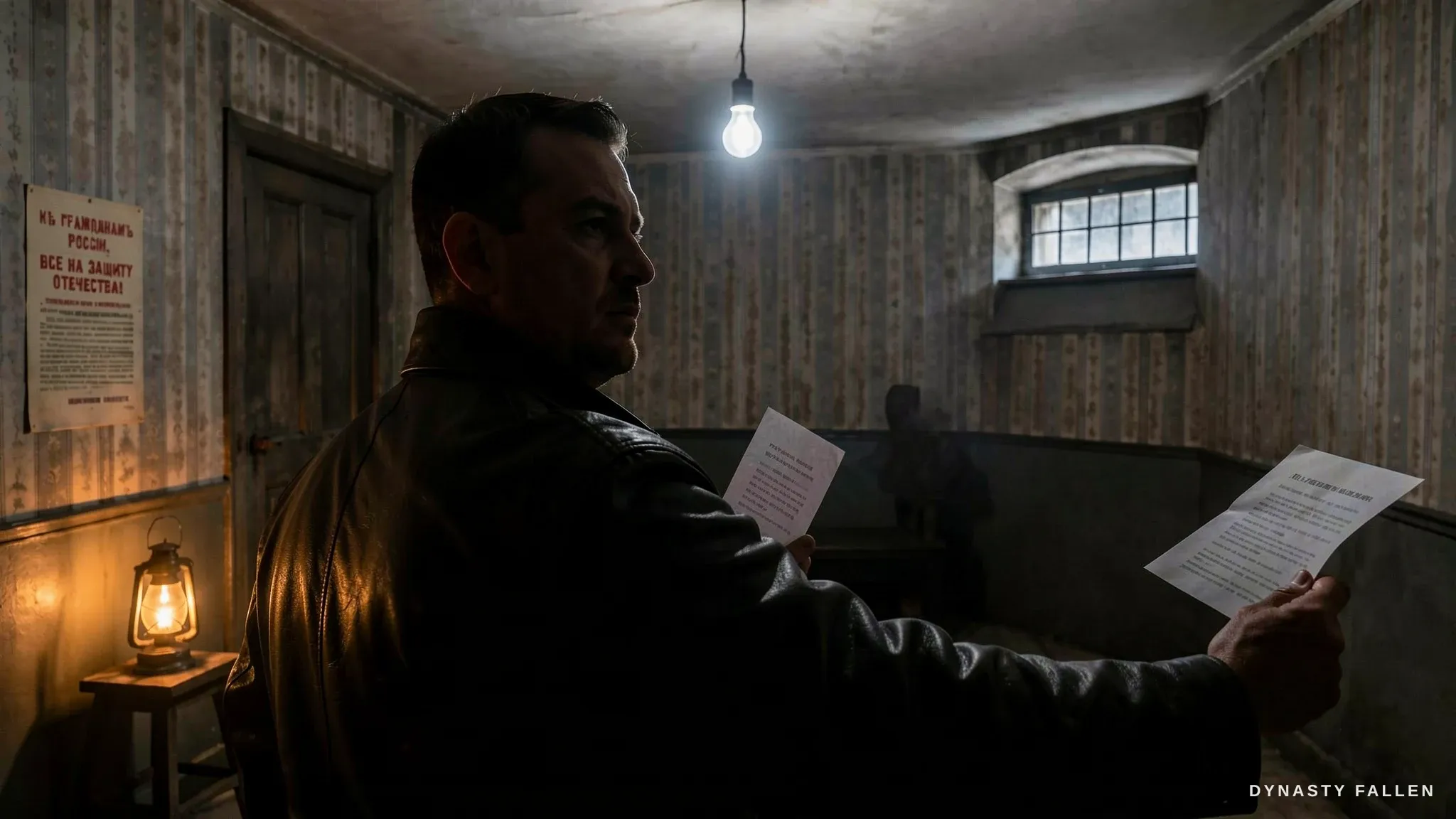
That the family was shot, that the jewels deflected the first volley, and that bayonets finished the killing are documented. The fine grain of the scene is not. Almost everything we “know” about the minute-by-minute choreography — who shot the Tsar, in what order the others fell, how long the daughters lived, what sounds they made — comes from the squad’s own later accounts, and those accounts contradict each other.
The men had reasons to shape the story. Yurovsky’s 1922 note and his 1934 speech differ from each other and from the statements of Medvedev, Nikulin, and Strekotin; each narrator tends to place himself where the history is most flattering and the worst of the brutality elsewhere. The result is a scene that is firm in outline and unstable in detail — a killing reconstructed from witnesses who were also defendants.
The album leans into this honestly. Where it stages a specific beat — a single defiant cry as the bullets bounce, a controlled utterance on the deflection frame — it is dramatising the shape the sources agree on, not claiming to have recovered the exact words. The girls almost certainly made some sound in that room; what it was, no honest source can tell you.
It was Anastasia, specifically, who was missing from the main grave.
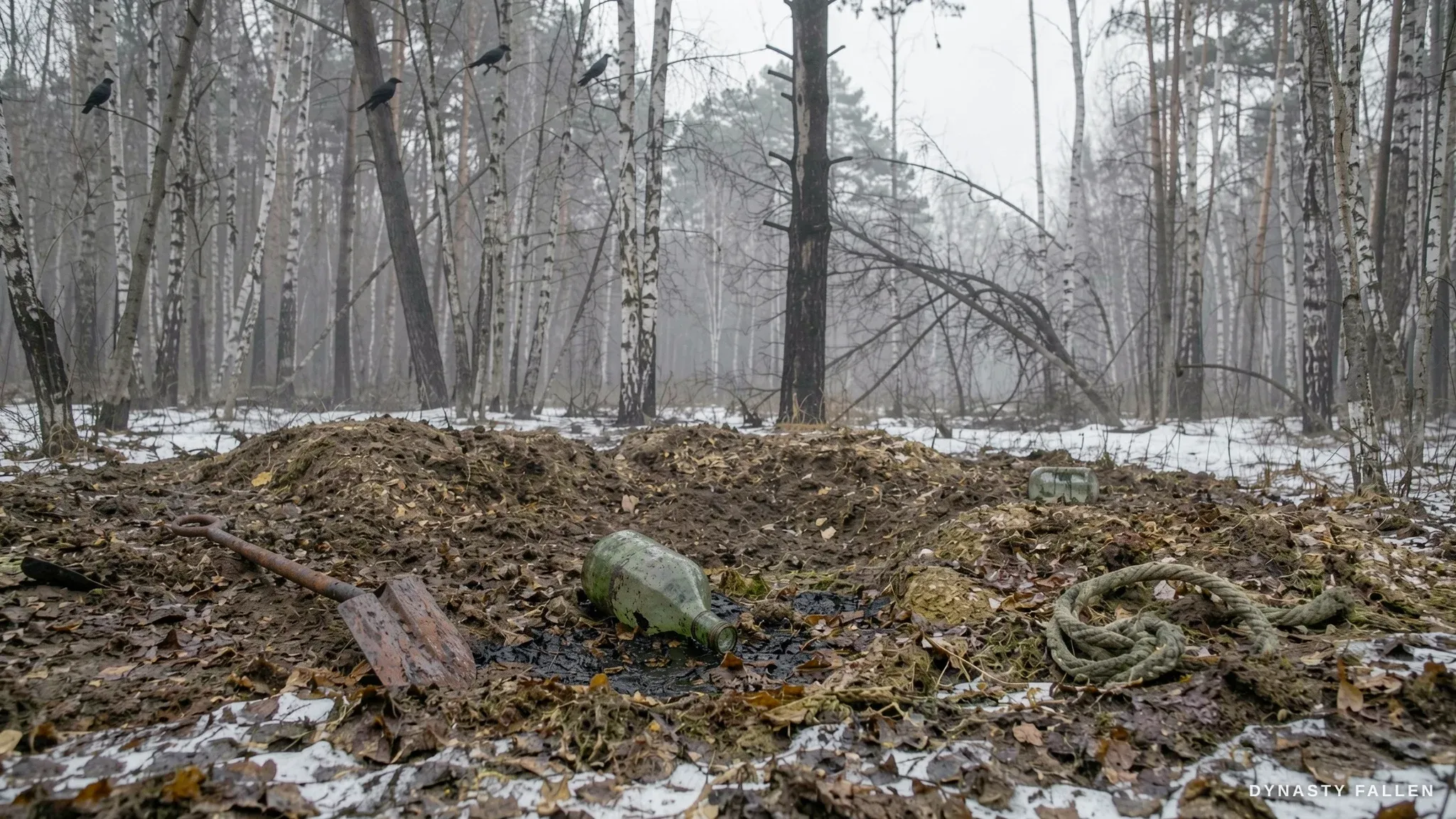
For sixteen years this was a real scientific argument, not a tabloid one. When the main grave was exhumed in 1991, it held nine bodies — two children short of the full family. Identifying which daughter was absent became a high-profile disagreement between forensic teams: Russian anthropologists, working from skeletal and dental analysis, concluded that Maria was the missing sister; American experts argued it was Anastasia. The bones in the grave could not settle it, because there was no surviving maternal reference unique to each sister to tell them apart by DNA.
This is the part of the survival story that had genuine scientific texture — and the album does not pretend otherwise. The dispute is exactly why the legend kept a foothold in serious circles into the 2000s: reasonable specialists disagreed about which girl was unaccounted for, which kept the “missing Anastasia” framing alive.
What the dispute never supported was survival. Both teams agreed two children were absent from the main grave; they argued only over labels. The 2007 second grave and the 2008 DNA work closed the question by recovering both missing children. Whether the catalogues finally read “Maria” or “Anastasia” for a given set of remains, all four daughters are dead — the dispute was about identity, never about escape.
The Ipatiev House was called the "House of Special Purpose," and the family was lured down "for a photograph."
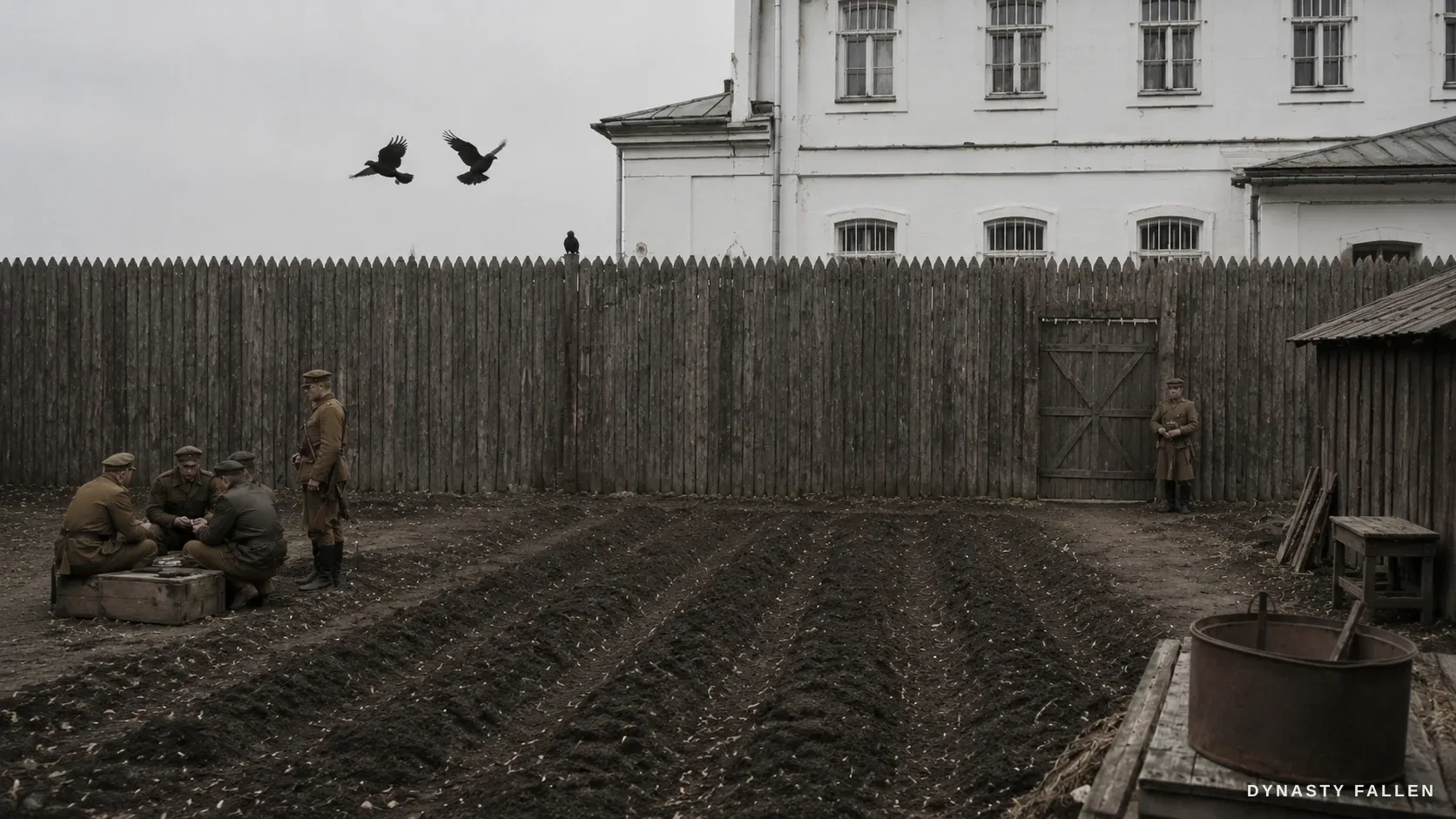
Both details are part of the standard narrative and both are plausible, but they reach us through a narrow channel. The Bolshevik designation of the requisitioned Ipatiev House as the Dom osobogo naznacheniya — “House of Special Purpose” — is an administrative usage attested in the period; the chilling euphemism is real, though the album leans on its menace more than a dry archive would. The “special purpose,” of course, was the killing.
The pretext for moving the family to the basement — that they were being gathered for a photograph, or for their own safety against unrest in the town — comes chiefly from the squad’s own accounts, principally Yurovsky’s. It is entirely credible: a quiet, orderly path to the cellar served the killers better than a panic. But it rests on the testimony of the men with the most reason to present the operation as controlled, and there is no independent witness to the words actually spoken on the stairs.
The album uses both — the euphemism as a closing trap, the photograph-lie as the last small deception before the volley. They are very likely true. They are also, like much of the cellar, the killers’ version of their own crime.
Moscow gave the order — Lenin and Sverdlov, not the Ural Soviet.
Somebody decided that the children would die too, and we do not have their signature. That is the honest position, and it is worth stating plainly because the certainty runs hot in both directions.
The case for the Ural Soviet is that this is what the participants said: Yurovsky’s accounts present the decision as the region’s, taken under the pressure of the Czechoslovak Legion’s advance on Yekaterinburg, with Moscow informed rather than commanding. The case for Moscow is circumstantial but heavy — the traffic between Yekaterinburg and the centre, Sverdlov’s role as the conduit, the implausibility of a provincial soviet unilaterally executing the former sovereign and his children without the centre’s assent, and a regime that never once disciplined anyone for having done it. No document survives in which Lenin orders the killing of the family. Historians have argued the point for a century and continue to.
The album does not adjudicate it, and deliberately so. No One Was Ever Tried is not a song about who signed; it is a song about the fact that nobody ever had to answer the question in a courtroom, where it would have had to be settled. The absence of an order and the absence of a trial are the same absence.
He told the whole story to a room of Old Bolsheviks — and was poisoned for it.
Two things are welded together in the popular telling, and they should be prised apart.
The address is real. In February 1934 Yurovsky recounted the killing to a gathering of Old Bolsheviks in Sverdlovsk — not a confession extracted from him, but a veteran’s account delivered to comrades, sixteen years after the fact. That a man could stand in a room and narrate the shooting of a family, including four young women and a sick boy, as a piece of revolutionary service history, is documented, and it tells you everything about the impunity this page is describing.
The poisoning is not. The claim that the NKVD killed him — usually tied to the arrest of his daughter Rimma, deported to the Karaganda camp in 1938 and held until 1946 — is persistent tradition rather than record. What is documented is that he died on 2 August 1938 of a perforated ulcer, and that the same year the state he had served took his daughter.
The album leaves that last irony out of the song on purpose. There is a version of this story that ends with the revolution devouring him, and it is emotionally satisfying and beside the point: an ulcer is not a verdict, and a daughter in a camp is not a sentence for killing someone else’s daughter. The track ends on the flat thing instead. No one was ever tried.
Legend & flourish
Where the record becomes a fairy tale.Anastasia survived the cellar and escaped.
This is the lie the album exists to break, and it is dead. The survival story had a real origin — not a sighting, but an absence: the Sokolov investigation found the murder site in 1919 but not the bodies, and the main grave exhumed in 1991 was two children short. Into that empty space rushed dozens of impostors, sympathetic émigrés who could not accept the family’s end, and eventually a global entertainment industry. For most of the twentieth century, “what if she got out?” was a question you could ask without embarrassment.
The forensic record answered it conclusively. The 2007 discovery of the second grave and the 2008 DNA identification accounted for both missing children; the peer-reviewed analysis confirmed that none of the four daughters survived. There was no escape from the cellar — not for Anastasia, not for any of them.
The album treats the survival myth as its antagonist rather than its premise. Every impostor, every “lost princess,” every screen resurrection is the lie the murdered girl’s voice is raised against. The cruelty the album insists on is that the fantasy of her survival was, for ninety years, more comfortable to the world than the documented fact of her murder.
The 1956 film made the impostor's story into Oscar-winning drama.
The first great screen Anastasia is essentially the Anna Anderson story with the serial numbers filed off. Anastasia (1956), directed by Anatole Litvak, was adapted from Marcelle Maurette’s 1952 play, itself openly inspired by the most famous of the impostors. Its plot is a con: a White Army general (Yul Brynner) and his associates groom an amnesiac woman (Ingrid Bergman) who resembles the lost grand duchess into claiming an inheritance — and the film leaves teasingly open the possibility that she really is Anastasia after all.
It is a beautiful, prestigious film. Bergman won the Academy Award for Best Actress, and the picture marked her Hollywood comeback. That is precisely the problem the album has with it: it took a documented fraud — a Polish factory worker passed off as a murdered child — and turned it into elegant, sympathetic, award-winning entertainment, with the “maybe she survived” ambiguity as its emotional payload.
The album does not despise the film; it refuses its bargain. Anastasia (1956) is the moment the survival legend graduated from courtroom curiosity to mainstream romance — the impostor’s claim, dignified, scored, and handed an Oscar, eighteen years before DNA would prove it false.
The 1997 animated musical resurrected her as a lost princess chased by an undead sorcerer Rasputin.
This is the album’s title antagonist and the source of its thesis line. Anastasia (1997), directed by Don Bluth and Gary Goldman for Fox Animation Studios, recasts the murdered seventeen-year-old as an amnesiac orphan named Anya who is, secretly, the surviving grand duchess. She is pursued across Europe by Grigori Rasputin — voiced by Christopher Lloyd and reimagined as an undead lich sorcerer who sold his soul to destroy the Romanovs — assisted by a talking albino bat. It is a charming, successful, beautifully animated musical; it grossed around $140 million and earned Oscar nominations for its songs.
Almost none of it is true, and the untruth is pointed. Rasputin had been murdered by Russian nobles in December 1916, roughly eighteen months before the family was killed, and had nothing to do with their deaths — there was no curse and no magic. And Anastasia did not survive. Most damningly, the film was made and released in the mid-1990s, after the 1991 exhumation and the DNA work had begun to close the case — a children’s musical resurrecting a real murdered child precisely as the science was confirming her death.
The album names this directly. Its thesis track — a fairy tale of my murder — is aimed at exactly this object: the desecration of turning a girl shot and bayoneted in a basement into a singing cartoon princess with a happy ending. The film is the lie at its most seductive, and the album refuses it most fiercely.
Rasputin's dark magic doomed the Romanovs.
The supernatural Rasputin is a screen invention with a thin thread of historical fact behind it. The fact: Grigori Rasputin, a Siberian peasant mystic, did acquire real and corrosive influence at court, largely because he appeared able to soothe the Tsarevich Alexei’s haemophilia attacks — a genuine medical desperation the dynasty kept secret. His presence damaged the monarchy’s legitimacy and fed the rumours that helped bring it down. That much is documented.
Everything else is fiction. Rasputin had no magic, laid no curse, and did not engineer the family’s deaths. He was murdered by a group of Russian nobles in December 1916 — poisoned, shot, and dumped in the Neva — roughly eighteen months before the Romanovs were killed in Yekaterinburg. He was already a year and a half dead when the cellar happened. The 1997 animated film’s lich-sorcerer, hunting the surviving princess from beyond the grave, is a pure villain-invention with no basis in the record.
The album handles Rasputin the way the catalogue handles all such figures: the real corruption of the throne is rendered through his influence at court, never the cartoon necromancer. The hollowing-out of a dynasty did not need black magic — a sick child, a desperate mother, and a war were enough.
The squad was “Latvians led by a Jew.”
This one is not a romantic embellishment like the survival story. It is propaganda, and it deserves to be named as such on a page about what is true.
The framing comes from Nikolai Sokolov, the White investigator whose 1924 report was the only accepted account of the murders for sixty-five years. Alongside genuinely valuable forensic work, Sokolov characterised the killers as “Latvians led by a Jew” — a formula that did enormous work for émigré and later fascist narratives, in which the murder of the imperial family became evidence of a foreign, Jewish conspiracy against Russia rather than an act of the Russian revolutionary state.
The rosters do not support it. The men in the cellar were almost entirely ethnic Russians — Nikulin, Ermakov, Medvedev (Kudrin), Kabanov, Netrebin, Vaganov among them. Yurovsky, who commanded, was born into a Jewish family and was by then an atheist Bolshevik; he was one man, and his Party, not his ancestry, put him in that room. The “Latvians” were a garbling of the Letts — a loose Bolshevik term for non-Russian guards — that hardened into fact through repetition.
The album has no interest in the conspiracy and every interest in the fact that this lie outlived the case. For most of a century the best-known account of the murder carried an antisemitic frame at its centre, and it went uncorrected because there was never a proceeding in which anyone had to produce the roster. That is what happens to a crime with no trial: the propaganda gets to write the record.
The men who did it were punished in the end.
Almost everyone assumes this, and nobody can say when they learned it, because nobody ever did. It is the mind refusing to leave a story unbalanced: the children were murdered, therefore, surely, at some point, somebody answered for it.
Nobody did. Not one participant was ever prosecuted for the killing. The commander was promoted, given custody of the state’s gold, and made a museum director. Others of the squad lived out ordinary Soviet lives on ordinary Soviet pensions. Several of them died in the decades that followed, of the things people die of; a few fared badly under a regime that fared badly with many of its own — but for reasons unconnected to that cellar, and never by way of a charge, a court, or a verdict naming what they had done.
When the Russian Federation finally opened a criminal case in 1993, and reopened it in 2015, it was to identify remains and settle a burial, not to try anyone: every perpetrator was long dead. The file closes with the victims named and the killers unindicted.
The album ends on this and refuses the comfort. There is no karmic coda, no cosmic reckoning, no last-minute justice arriving late. Just the archive, the closed box, and the flat sentence: no one was ever tried.
A note on stance
Why the album holds the position it does
The album takes the documented record over the fairy tale, openly and without hedging. The forensic evidence is conclusive: Anastasia did not survive, no impostor was her, and the survival story is a ninety-year-old wish that DNA disproved. Vol. XI treats the lie not as an open question but as the antagonist — the thing the murdered girl's voice is raised against.
If you want the fairy-tale Anastasia, she escaped the cellar, wandered amnesiac through the twentieth century, and was a princess all along; the films will give her to you, and one of them is genuinely beautiful. If you want the documented Anastasia, she was a seventeen-year-old girl shot and bayoneted in a basement with her whole family, buried in acid in a forest, and left there until a DNA lab finally let her stay dead. The album is unambiguous about which of these is true.
Vol. XI is for the girl in the cellar, not the cartoon. This page is so you can see exactly where the record ends and the fairy tale begins — and why the album refuses to let the second one stand in for the first.
Sources & further reading
What the album draws from, and modern scholarship for digging deeper.Primary sources
- The Yurovsky Note and 1934 Speech
The commander of the execution squad's own accounts of the night of 16–17 July 1918 — the read sentence, the volley, the jewels deflecting the bullets, the bayonets, the burial in the Koptyaki forest. First-hand and detailed, but self-serving and inconsistent between versions; the load-bearing facts agree, the choreography does not.
- Statements of the execution squad
Corroborating first-hand accounts from men present in the basement. They confirm the broad shape of the killing and the jewel-armour detail while disagreeing on who shot whom and in what order — the raw material from which the cellar's exact choreography has to be reconstructed.
- The Sokolov Investigation
The White Army judicial investigation into the murders, conducted months after the event. It established the killing and the Koptyaki disposal site but — fatefully — failed to find the bodies, helping seed the survival legend. A primary source compromised by its own incompleteness and its anti-Bolshevik commission.
- The forensic exhumation record
The physical remains: the main grave (located 1979, exhumed 1991) and the second grave of the two missing children (found 2007). The skeletal and dental evidence, and the DNA extracted from it, is the impartial witness against which the killers' testimony and the survival legend are both measured.
- OTMA family letters and diaries
The sisters' own surviving correspondence and the family's captivity diaries — the source for Anastasia's character (the family clown, nicknamed Shvybzik), the collective OTMA signature, and the daily texture of the house arrest at Tobolsk and Yekaterinburg.
Modern scholarship
- The Race to Save the Romanovs
The standard modern account of the failed rescue attempts and the European royal politics around the family's fate — including George V's refusal of asylum. The corrective to the screen versions that frame the killing through royal guilt.
- The Last Days of the Romanovs
A close reconstruction of the final two weeks in the Ipatiev House and the night of the murders, weighing the squad's competing accounts. The strongest modern narrative of the cellar itself.
- Nicholas and Alexandra
The classic popular biography of the imperial family — the haemophilia, Rasputin, the war, the abdication. Best for the dynasty's slow collapse; predates the DNA closure and treats the survival question as still open.
- The Romanovs: The Final Chapter
Massie's sequel, written around the 1990s DNA identifications and the Anna Anderson testing. The accessible standard account of how forensic science closed the case the first book left hanging.
- Mystery Solved: The Identification of the Two Missing Romanov Children Using DNA Analysis
The peer-reviewed study confirming the 2007 second grave as Alexei and a sister, and demonstrating that none of the four daughters survived. The scientific full stop on the survival legend.
- The Resurrection of the Romanovs
A book-length forensic and biographical demolition of the Anna Anderson claim — how the Franziska Schanzkowska identification was built and why it holds. The standard treatment of the impostor decades.
Read online
- Mystery Solved (PLOS ONE / PMC full text)
The full peer-reviewed DNA paper identifying the two missing children and closing the survival question.
pmc.ncbi.nlm.nih.gov → - Murder of the Romanov family — Wikipedia
A well-sourced entry into the execution, the squad accounts, the disposal, and the forensic timeline.
en.wikipedia.org → - Anna Anderson — Wikipedia
The impostor's life, the fifty-year claim, and the 1994 DNA identification as Franziska Schanzkowska.
en.wikipedia.org → - Grand Duchess Anastasia Nikolaevna of Russia — Wikipedia
The biographical entry — her life, the OTMA sisterhood, the survival legend, and the forensic closure.
en.wikipedia.org →
Citations on individual claims above point to specific chapters and editions. The list here is the broader context — what to read next if you want to follow the queen out of the song and into the historical record.