i.

Daughter of All the Russias

Act I — The House Released Approx. 4:05
Verse 1
Two spoken lines, close-mic and venomous, then the band detonates — biting balalaika tremolo, Orthodox bells.

Before the cellar, before the lie,
there was a house of gold, and it was mine,
Four girls in silk — I was the wild one,
quick feet on marble, a knife in my grin,
they'll tell you I was sweet — they're lying,
Romanov gold — the small one cut deep.

Pre-Chorus

They have not built the cellar — but it's coming,
the snow on the Neva runs red.

Chorus
Full band, war drums, tubular bells, women's chorus snarling in unison.

Daughter of all the Russias —
last gold morning, burning crown,
you won't learn my name,
you'll only bring me down,
and sell it as a bedtime story.

Verse 2
Same palette, harder, distorted guitars forward.

My brother bled secrets the priests hid,
a holy man rotted the throne,
war took the bread, the boys, the winter,
and the gold turned the color of a wound.

Pre-Chorus

They are sharpening the cellar now, somewhere,
and the Neva won't wash out the red.

Chorus
Bigger, women's chorus layered, more venom.

Daughter of all the Russias —
last gold morning, burning crown,
you won't learn my name,
you'll only bring me down,
and I'll rot every fairy tale.

Bridge
Sudden drop to harmonium and balalaika, a bitter exposed mezzo into a soprano lift that cracks into rage.

Anastasia — it means the one who rises,
my mother breathed it like a prayer,
so they made my dead mouth dance and smile for them —
the only thing that rose was the lie, not me.

Final Chorus
Biggest, angriest — double bass drums, full women's choir.

Daughter of all the Russias —
last gold morning, burning crown,
remember the blood, not the bedtime story,
remember me — the girl you put down,
I was here, I was real, I was no one's lie.

Outro
Balalaika alone, fading, then a hard cut.

There was a house of gold,
and it was mine.

The history

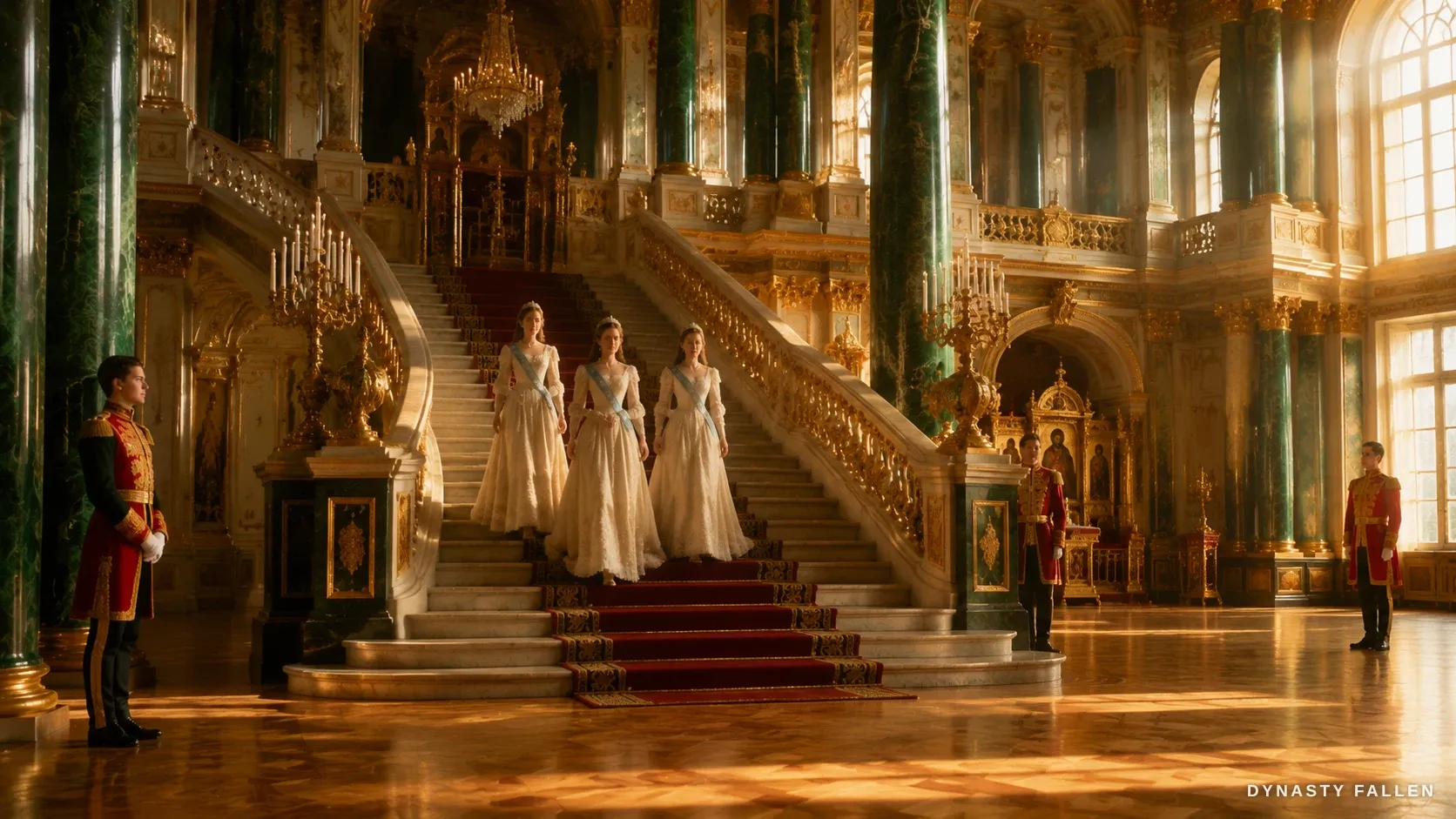
Imperial Russia at its gilded height, c. 1913–1916 — narrated in retrospect from beyond the Yekaterinburg cellar of July 1918

Source: Romanov family letters and diaries; standard biography (Massie, Nicholas and Alexandra); the etymology of the name. See Truth & Legend.

Named figures

  • Anastasia Nikolaevna Youngest daughter of Nicholas II; the family clown, nicknamed Shvybzik (‘imp’); narrator of the album
  • The OTMA sisters Olga, Tatiana, Maria — the four daughters who signed their letters collectively as OTMA; the ‘four girls in silk’
  • Alexei The heir, whose haemophilia was a state secret — the ‘brother who bled secrets the priests hid’
  • Grigori Rasputin The mystic at court, narrated never quoted — the ‘holy man who rotted the throne’

What this song renders

The world the song establishes is documented in outline. Anastasia was the youngest of Nicholas and Alexandra’s four daughters; the sisters really did sign their letters collectively as OTMA, and Anastasia really was the family’s mischief-maker, nicknamed Shvybzik — the ‘imp.’ The ‘house of gold’ is the imperial court at its height before the First World War broke it.

The rot the second verse names is also documented: the Tsarevich Alexei’s haemophilia was a genuine state secret, the medical desperation that drew Rasputin to court and corroded the monarchy’s legitimacy; and the war stripped the country of bread, men, and winters in the years before the abdication. The song renders Rasputin only in narration — the ‘holy man who rotted the throne’ — never as the cartoon sorcerer of the films.

The bridge turns on a true etymology: Anastasia derives from the Greek anastasis, ‘resurrection.’ The album takes that coincidence as its engine — the one daughter whose name means ‘she who rises’ became the one the world refused to let stay dead. The track itself depicts no survival; the rising it refers to is the lie’s, not the girl’s.

Verdict

The court at its height, the OTMA sisterhood, Anastasia’s character, Alexei’s secret haemophilia, Rasputin’s influence, and the name’s meaning are all documented. No specific episode is dramatised — this is the album’s establishing shot, and the ‘resurrection’ it invokes is the lie the album spends nine tracks refusing. See Truth & Legend.

See the full Truth, Saga & Legend entry