iii.

Forty Keels

Act I — Daughter of Erik Released Approx. 4:27
Verse 1
Two lines spoken low-chest with a Norse breath over frame-drum gallop, low whistle in hopeful-Vinland register, and palm-muted electric guitar from the first beat. Then the band warms and the rest of the verse lands sung — mezzo gritty in mid-chest, bouzouki under, bowed-lyre cold counter-line.

Forty Norse keels on the western tide,
Leif came back, her Thorvald died,
One of those keels was hers to take,
She rose at dawn, the men still slept,
Leif came home, green-lands behind,
Thorvald — with arrows in his side.

Pre-Chorus
Tightening — frame-drum gallop fast, low whistle ascending, bouzouki under.

She went where the others would not go,
She sailed beyond the names they know,

Chorus
Full band entering, twin-guitar harmonies, women's chorus locked under the lead carrying the destiny voice, Norse lurr horn on downbeats. Double-kick deliberately held back.

Iron and tide, the keel my prow,
West I came and the green land bowed,
Salt and sail, the wave is mine,
Erik's daughter, the green-land line.

Verse 2
Sung full band, palm-muted galloping guitars, bouzouki under. The keel-count rendered as numbers — the saga's documented mortality compressed into four lines.

Forty keels rose on the western tide,
Thirty-eight came home, the rest were lost,
One came back broken, the crew half-gone,
One was a ghost on the homeward shore.

Pre-Chorus 2
Thickening — frame drum doubles, twin guitars rise. Double-kick still held.

She went where the brothers could not stay,
She held the line where they fell away,

Chorus 2
Full band louder, lead guitar harmony layered with the rhythm, women's chorus louder, war horn.

Iron and wind, the keel my cry,
West I went, and I would not die,
Salt and steel, the wave is mine,
Erik's daughter, the white-land line.

Bridge
Drums half-time, soprano lift arriving on the gendered-inversion lines, women's chorus underneath, bouzouki strum accent, low whistle ascending. The album's first explicit gendered statement.

The men named what they reached and lost,
They mapped the green to the rivers crossed,
But the land lay wide for the women too,
Wide enough for a daughter's view.

Instrumental
Eight bars — soaring lead guitar over frame-drum gallop and bouzouki. Roughly fourteen seconds.
Final Chorus
Full band biggest, double-kick locked at last, twin-guitar harmonies, soaring lead guitar over the second half, women's chorus locked, war horn on every hit.

Iron and storm, the keel my roar,
West I drove to the unmapped shore,
Salt and storm, the wave is mine,
Erik's daughter, and both lands mine.

Outro
Drums fade to a single beat, low whistle final phrase, hard cut. The Track 04 expedition transition seed.

Forty keels rose, the next was mine,
I laid the keel by my own line.

The history

Early eleventh century · the Eastern Settlement at Brattahlíð and the Vinland coast · the brothers’ expeditions and Freydís’s claimed keel

Source: Eiríks saga rauða (Hauksbók, Skálholtsbók); Grœnlendinga saga (Flateyjarbók); Landnámabók; modern scholarship on the Norse-Vinland voyages and the L’Anse aux Meadows excavations (Jesch, Sigurðsson, Magnusson, Wallace)

Named figures

  • Leif Eríksson Freydís’s half-brother; c. 1001 sailed west from Brattahlíð, made landfall at Helluland, Markland, and Vinland, and returned with the green coast in the record. The Vinland voyages start here
  • Thorvald Eríksson Freydís’s full brother; led the second expedition c. 1003–1004 and was killed by a Skrælingar arrow on a coastal landing, per Eiríks saga rauða — the first documented Norse death on a North-American shore
  • Þorfinnr Karlsefni Icelandic-Norse expedition leader; assembled the largest Vinland voyage c. 1009–1012 from ships gathered at Brattahlíð — the expedition Freydís sailed with. His wife Guðríðr gave birth to Snorri Þorfinnsson in Vinland, the first European child documented born on the continent
  • Freydís Eiríksdóttir Daughter of Erik the Red; third generation of an outlaw line; one of the figures the saga record places on the Karlsefni expedition, the only Norsewoman documented to have led a transatlantic expedition of her own

What this song renders

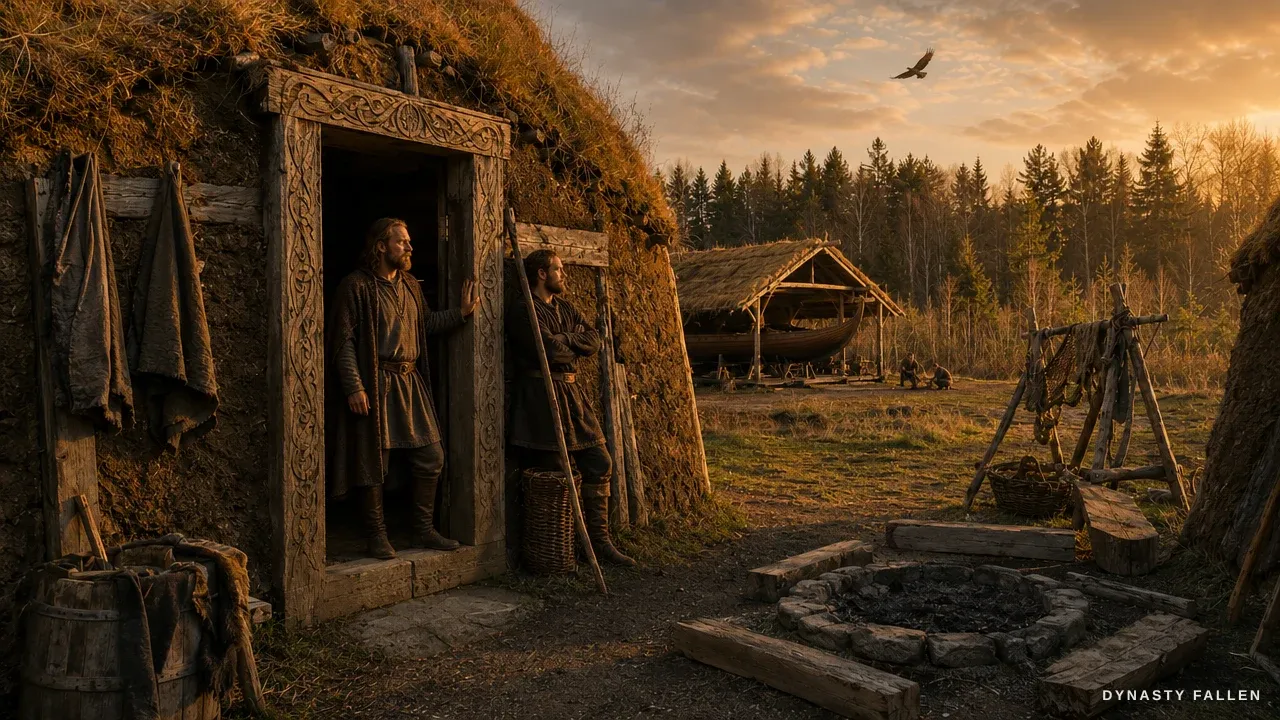
The Norse-Vinland voyages are the most archaeologically anchored of the saga episodes. Helge and Anne Stine Ingstad’s excavation at L’Anse aux Meadows on the northern tip of Newfoundland (1960–1968) recovered the foundations of eight Norse turf-and-timber buildings, period-accurate Viking-age iron nails, a soapstone spindle whorl, and a bronze ring-headed pin — the only confirmed pre-Columbian Norse settlement in North America. The site dates to c. 1000 and is consistent with the saga record of three or four short-lived expeditions in the first two decades of the eleventh century. The green coast was real; the keels did rise; the saga numbers compress what was almost certainly a smaller fleet than forty — but the documented mortality is real.

Eiríks saga rauða places Freydís on the Karlsefni expedition; Grœnlendinga saga gives her a separate command of her own a few years later. The two saga sources disagree on almost every detail of her life — this is the album’s central historiographical conceit. Track 03 sits inside the documented frame: the brothers’ expeditions, the Karlsefni fleet, the green coast first-seen, the cost of the crossings. Thorvald’s arrow-death is a saga episode but with archaeological corroboration — the Norse did meet Indigenous Maritime peoples on these shores, and the violence is recorded on both saga sides.

The track’s gendered turn in the bridge — “the men named what they reached and lost — but the land lay wide for the women too” — is the album’s first explicit thesis statement. It is not a saga line; it is the album’s argument, planted here and paid off in Track 06 (Iron and Ink) and Track 08 (Saga of Ice, Saga of Snow). The Final Chorus closing line “Erik’s daughter, and both lands mine” seeds the album’s both-thesis — Greenland and Vinland, and later, both sagas.

Verdict

The Norse-Vinland voyages, the Karlsefni expedition, Leif’s c. 1001 voyage, and Thorvald’s arrow-death are documented in both sagas and archaeologically supported at L’Anse aux Meadows. The fleet number forty is the album’s saga-stylized inheritance — the historical fleet was almost certainly smaller (the sagas give counts in the 60-person, 3-ship range for Karlsefni). The gendered bridge claim and the “both lands mine” closure are the album’s thesis, not the saga record — the song is open about being an argument laid onto the documentary frame.

Read the full Truth, Saga & Legend page