The story
First century BC
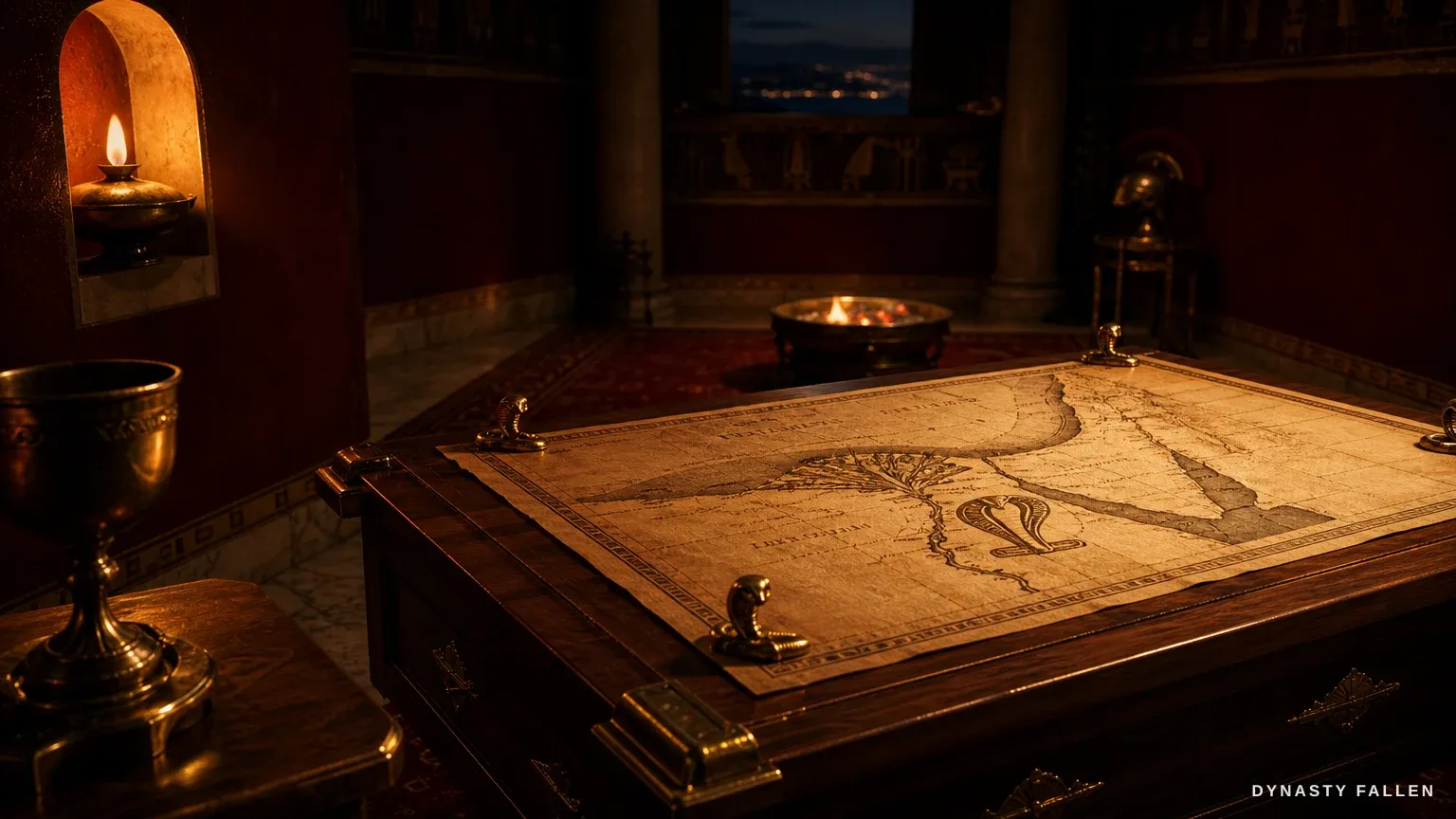
Egypt, Alexandria, the Nile
The last pharaoh against the Roman tide
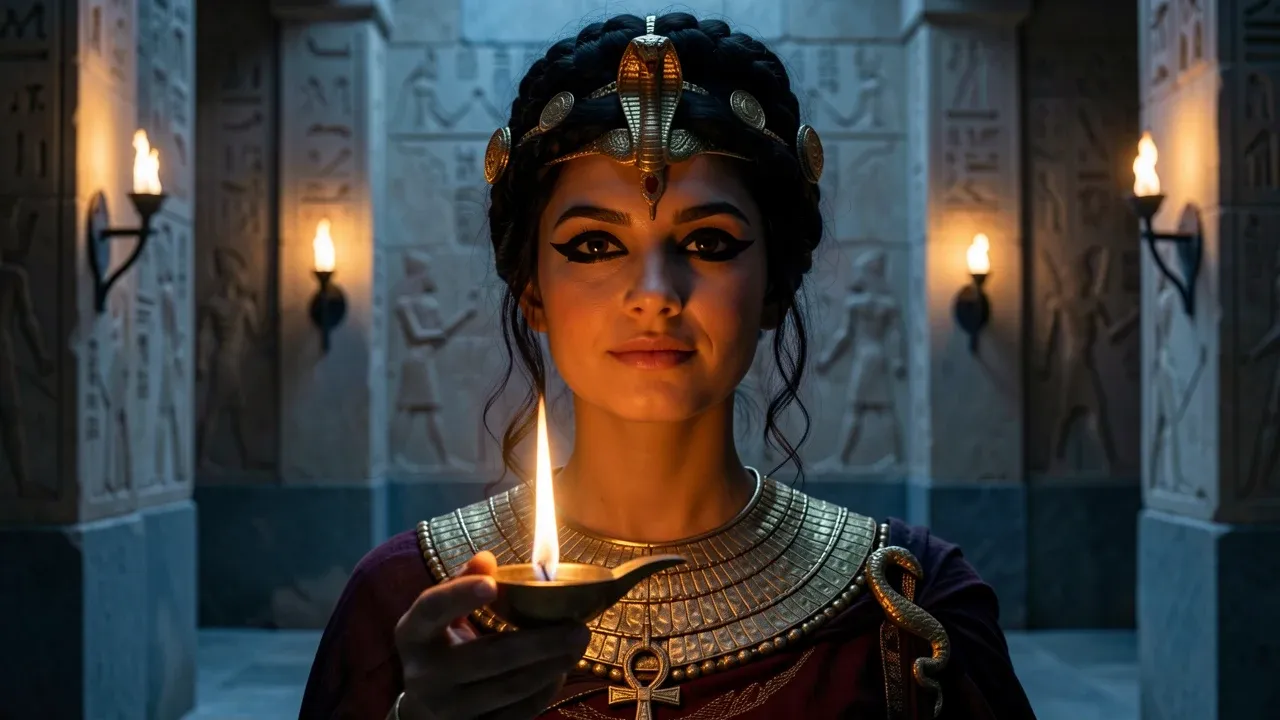
Cleopatra VII Philopator (69–30 BC) was the last Ptolemaic ruler of Egypt and the first Ptolemy in three centuries to learn the Egyptian language. Plutarch reports she spoke nine — Egyptian, Greek, Latin, Hebrew, Aramaic, Arabic, Median, Parthian, Ethiopian. She inherited a kingdom bankrupted by her father’s tribute to Rome, took the throne at eighteen, was driven out by her brother-husband, smuggled herself back to Caesar in linen bedding (not a carpet — Plutarch’s word is strōmatodesmos), restored her throne, bore Caesar’s son Caesarion, married Mark Antony Egyptian-style, bore three more children, lost Actium, watched Antony die, and chose the asp rather than walk in Octavian’s triumph.
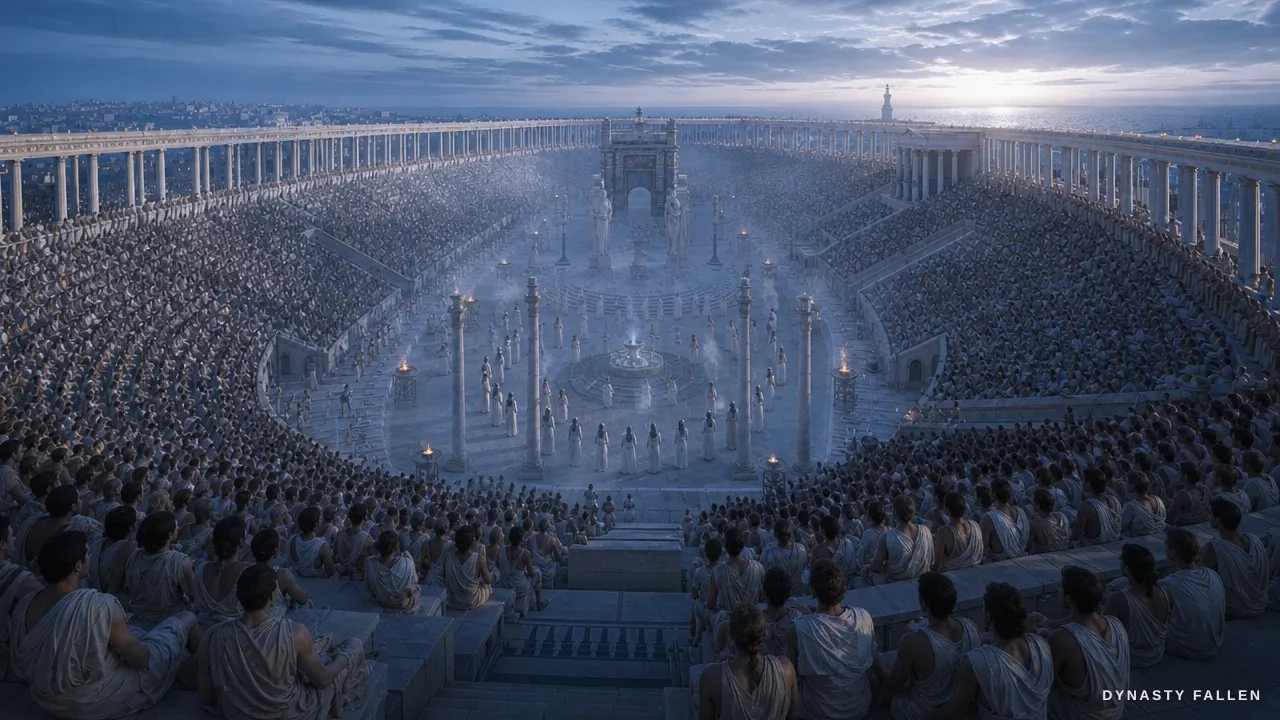
Every Cleopatra treatment in pop culture builds on Octavian’s record — the seductress, the foreign temptress, the danger Rome had to put down. The Roman tradition (Plutarch, Cassius Dio, Vergil, Horace) was state propaganda by the man who killed her. The Egyptian record is different. Her coins show her in pharaonic regalia. Her titles include Thea Neotera — the Younger Goddess. Her inscriptions at Philae and Dendera document her as Isis-on-earth. The Donations of Alexandria ceremony in 34 BC — attested by three independent hostile Roman sources, which means even the propaganda tradition can’t deny it happened — seated her enthroned as Isis with Caesarion as Horus and Antony as Osiris-Dionysus, distributing Roman-conquered territories to her divine children.
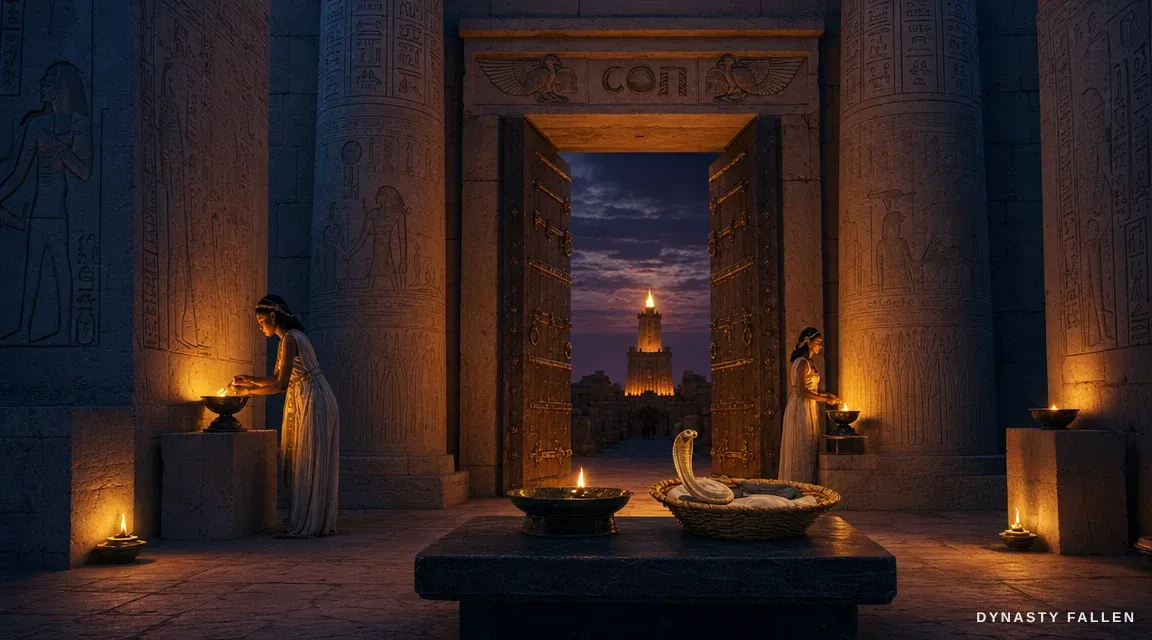
The album takes the Egyptian record over Octavian’s. Cleopatra wasn’t like Isis — she performed the goddess as state religion, and the historical evidence supports the claim more than the seductress-myth does. Vol. VII commits to that frame across ten tracks: the coronation, the goddess in the temple, the goddess on the barge at Tarsus, the goddess on the silver dais at the Donations, and the goddess in the mausoleum choosing the cobra of Lower Egypt as her final unification with the figure she had been embodying her whole reign.
The thesis line — Isis walks in me, and Rome will learn what that means — is the album’s spine. Planted in Track 01’s bridge, stated in Track 04’s, reclaimed in past tense at Actium, turned to divine grief in Track 09, and sealed in past-tense closure on Track 10. The arc is from claim to consequence: a queen who told Rome what she was, and a Rome that could not absorb the answer.
Album in active production. 10 of 10 tracks released.