Truth, Saga
& Legend
What’s documented, what’s tradition, what’s storyteller’s flourish.
An annotated history of Tomyris of the Massagetae.
The premise
Tomyris is one of the most famous women of antiquity and one of the least documented. She survives almost entirely in a single source — Herodotus, writing roughly a century after the events — and the death she is said to have dealt is one over which the ancient world could never agree. This page sorts the documented spine (a real people, a real campaign, a real death in 530 BC) from the saga (the refusal, the wine-trap, the vow, the wineskin) from the legend (the king who supposedly died peacefully in bed, and everything the centuries since have hung on her name).
The principal narrative source is Herodotus, Histories Book I (1.201–216), written around 430 BC — roughly a hundred years after Cyrus the Great died around 530 BC. Herodotus is a careful reporter working from oral tradition, and he is unusually honest about his limits: he tells us outright that many stories were told about how Cyrus died, and that he is giving the one he finds most credible. The Tomyris narrative — the marriage proposal, the crossing of the river, the wine-trap, the son's suicide, the vow, the head in the skin of blood — comes almost entirely from this passage. It is vivid, it is shaped like a moral (Persian hubris punished by the people it underestimated), and it is essentially our only witness.
Around Herodotus stand the contradicting traditions, and they matter as much as he does. Ctesias (early 4th century BC), a Greek physician at the Persian court, has Cyrus dying of a wound fighting the Derbices — not the Massagetae, and with no Tomyris at all. Xenophon's Cyropaedia (early 4th century BC) has him dying peacefully in bed, surrounded by his sons, delivering a philosopher's deathbed speech. Berossus and the Babylonian tradition give yet other shapes. That the manner of Cyrus's death was already disputed in antiquity is not a weakness in the record — it is the central historical fact, and the album is built on it.
The documented spine is firmer than the story. Babylonian chronicles record that Cyrus's reign ended and Cambyses succeeded in 530 BC; the broad consensus places his death on a campaign against steppe nomads beyond his northeastern frontier. The Massagetae were a real Iranian-speaking nomad confederation, and the customs Herodotus reports — sun-worship, horse sacrifice, horse-archery, mare's-milk — line up with what archaeology knows of the Saka steppe cultures. And the king's own propaganda, the Cyrus Cylinder and the Achaemenid royal inscriptions, says nothing whatever about how he died. The skeleton is solid. The wineskin is Herodotus.
Verdicts below: Documented · From the sources · Legend & flourish.
Documented
What multiple independent sources agree on.Cyrus the Great died in 530 BC and was succeeded by his son Cambyses.
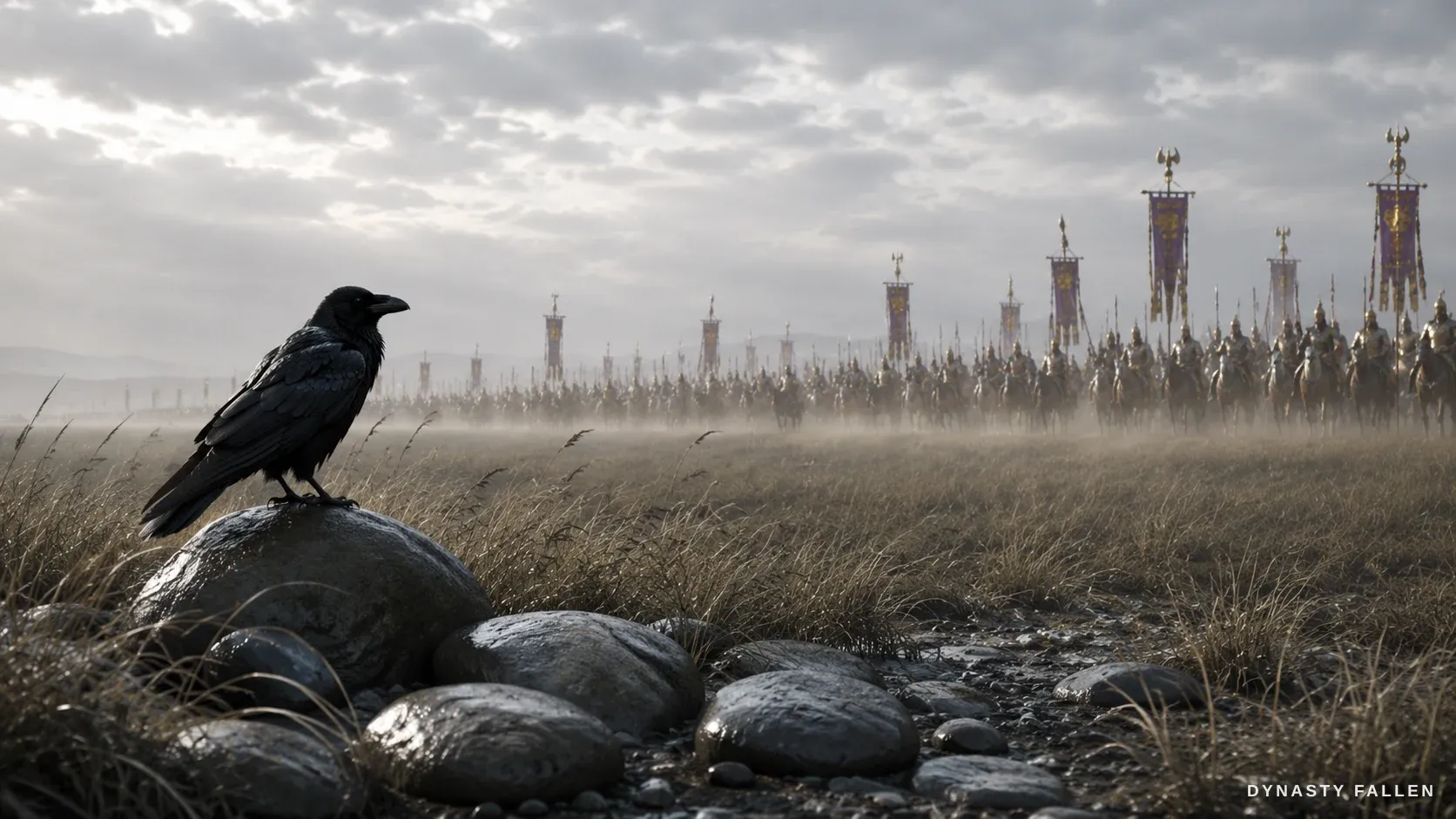
This is the album’s load-bearing fact, and it is solid in a way almost nothing else about Tomyris is. The political skeleton — that Cyrus the Great’s reign ended and his son Cambyses became king in 530 BC — rests not on the Greek storytellers but on Babylonian cuneiform records kept by scribes who had no stake in the Tomyris narrative at all. The dating is near-contemporary and uncontroversial.
What the documents fix is the when and the who-came-next, not the how. The chronicles record a reign ending and a succession; they do not narrate a battle, a queen, or a wineskin. Modern Achaemenid scholarship treats the death-date and the succession as bedrock and everything about the manner of death as open.
The album builds on this firm point and is careful not to claim more from it than it gives. Cyrus died in 530 BC. That much the record guarantees. The argument is entirely about what happened on the way to that date.
Cyrus died on campaign against steppe nomads beyond his northeastern frontier.
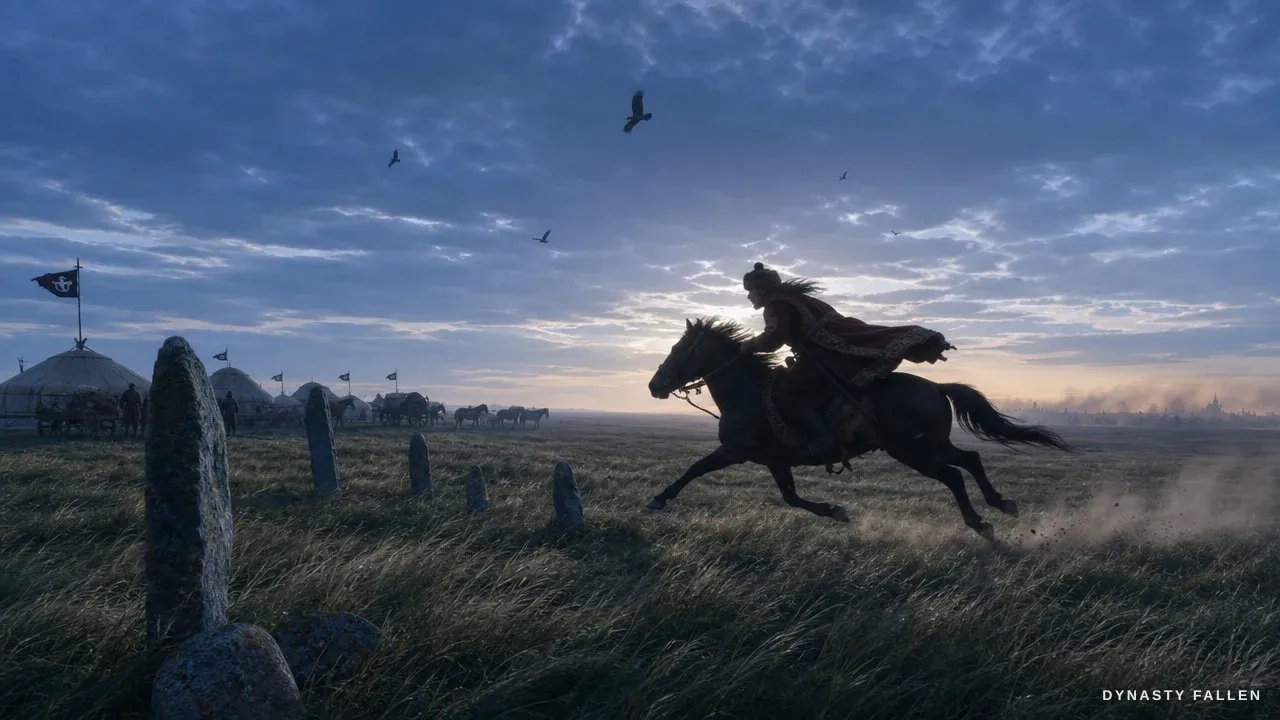
Here the agreement is broad even where the details diverge. The ancient traditions cannot agree on which nomads killed Cyrus, on the name of the river he crossed, or on whether a queen was involved — but they converge on the setting: Cyrus died fighting on the open steppe beyond the northeastern edge of his empire, in the lands of the Iranian-speaking nomad confederations east of the Caspian.
Herodotus names the Massagetae and the river he calls the Araxes (most likely the Jaxartes / Syr Darya). Strabo, reporting several versions, keeps the same region. Even Ctesias, who substitutes the Derbices for the Massagetae, keeps Cyrus dying out east against nomads rather than in a palace. The location is one of the few things the disagreeing sources hold in common.
The album treats the steppe campaign as the documented frame inside which the contested story sits. That Cyrus died out there, fighting nomads, is about as secure as the manner of his death is uncertain.
The Massagetae were a real Iranian-speaking nomadic confederation east of the Caspian.
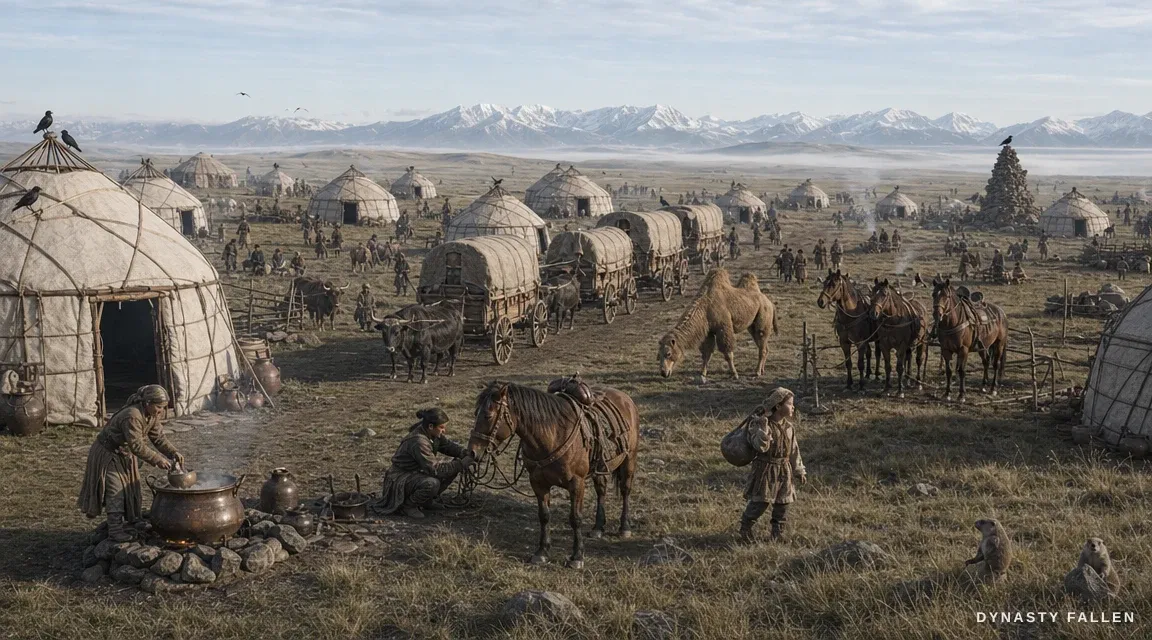
The Massagetae are not a literary invention. They are named by Herodotus and Strabo as one of the Iranian-speaking nomad peoples — kin to the Scythians and the Saka — ranging the steppe and the lands east of the Caspian. Their place in the ancient ethnographic map is consistent across the Greek geographers.
Archaeology backs the broad picture. The horse-centred, mound-burying, gold-working nomad cultures of the Eurasian steppe in the first millennium BC — the Saka and Scythian world documented from the Black Sea to the Altai — are exactly the kind of society the sources describe the Massagetae as belonging to. We cannot put a precise pin in ‘the Massagetae’ on a modern map, and scholars debate how clean the ancient labels really were, but a real nomad confederation of this type, in this region, in this era, is not in doubt.
The album’s whole world — the wagons, the horse-archers, the open country with no walls — rests on this documented foundation rather than on Herodotus’s drama.
The Massagetae worshipped the sun as their only god and sacrificed horses to it.

Herodotus closes the Massagetae account (1.215–216) with an ethnographic sketch: they are horse-archers, they live on their herds and on the fish of the river, they drink mare’s milk, and — the line the album builds its theology on — “the only god they worship is the sun, to whom they sacrifice horses.”
This is the part of Herodotus that comparative evidence supports most strongly. The centrality of the horse — in life, in war, and in death — is the single best-attested fact about the Iranian steppe nomads, written across thousands of excavated burials in which horses accompany their riders into the grave. Sun and sky veneration and horse sacrifice are widely paralleled across Scythian and Saka cultures. Herodotus was a careful ethnographer when he reported customs, even when his narrative drama is harder to verify.
The album takes the sun-as-only-witness as its central religious frame — the god Tomyris swears her vow by — precisely because this is one of the places where the source and the archaeology agree.
The manner of Cyrus's death was already disputed in antiquity.
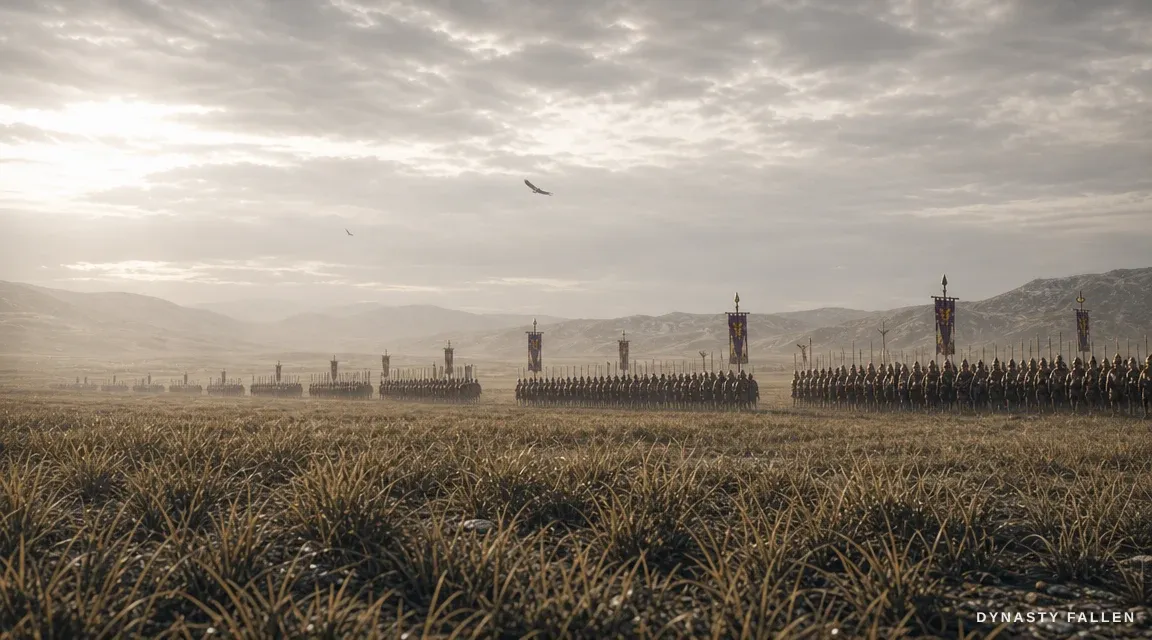
This is the album’s intellectual hinge, and it is a documented fact rather than an interpretation. The ancient world did not have one account of how Cyrus the Great died. It had several, and they were already irreconcilable within a century or two of the event.
Herodotus himself admits it — he says many versions were told and that he reports the one he finds most credible. Ctesias has Cyrus dying of a wound against the Derbices, not the Massagetae. Xenophon has him dying peacefully in bed. Strabo, writing later, catalogues multiple traditions. The disagreement is not modern scepticism projected backward; it is right there in the sources.
That irreconcilability is the historical datum the album is built on. When the founder of the largest empire the world had yet seen dies and his own civilisation cannot settle on how, the gaps and the contradictions are themselves evidence — of a death the imperial record found inconvenient to fix in place. The page treats the fact of the dispute as documented, and the choice of which version to believe as the argument.
From the sources
Mostly Historia Augusta. Plausible, vivid, but unverified by independent sources.Tomyris was queen of the Massagetae, ruling in her own right as a widow.

Tomyris herself — her name, her queenship, her widowhood — comes from Herodotus and from later writers who depend on his tradition. There is no inscription that names her, no Persian record, no archaeological object that can be tied to her. She is, as a historical individual, a Herodotean figure.
That does not make her invented. Female authority among the steppe nomads is well attested: Saka and Sarmatian burials include richly armed women, and the Greeks’ own ‘Amazon’ traditions grew out of real contact with steppe societies where women rode and fought. A widowed queen leading a Massagetae confederation is entirely plausible on everything we know of the world she belonged to. What is missing is independent confirmation that this queen, by this name, existed.
So the honest verdict is single-source. Herodotus says there was a queen called Tomyris who ruled the Massagetae and refused and then destroyed Cyrus. Nothing outside his tradition confirms her — and nothing outside it preserves her either. The album commits to her fully, because the alternative to believing Herodotus here is not a better-documented Tomyris; it is no Tomyris at all.
Cyrus proposed a dynastic marriage and Tomyris refused it, reading it as conquest by other means.
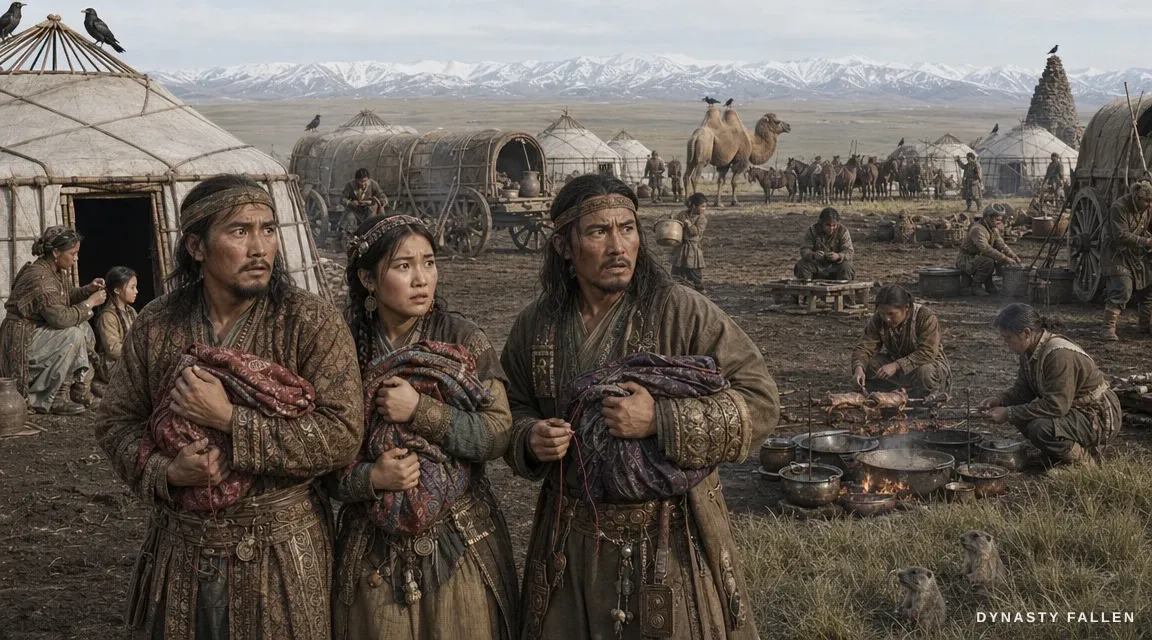
Herodotus opens the campaign (1.205) with the proposal: Cyrus, wanting the Massagetae, sends to Tomyris offering marriage. She sees through it — understanding that he is wooing her kingdom and not her — and refuses. The refusal is what turns courtship into war: Cyrus drops the pretence and marches.
The exchange has the clean shape of literary reconstruction. The proposal-as-disguised-conquest and the queen-who-sees-through-it form a tidy moral set-piece of exactly the kind ancient historians built from a known outcome. Whether a formal embassy and a formal refusal happened as told, or whether Herodotus has dramatised a more diffuse breakdown into a single decisive scene, is unknowable.
The album takes the refusal as its first act because it is where the saga locates Tomyris’s character — the queen who reads an empire’s flattery as a survey of the ground it means to take. It is Herodotus’s framing, vivid and singular, and the page is clear that it stands or falls with him.
Cyrus captured Tomyris's son Spargapises with a wine-trap, and the son killed himself in chains.
Herodotus gives the trap in detail (1.211–213). On the advice of the captive Croesus, Cyrus leaves a camp lightly held and well stocked with wine and abandons it to the Massagetae. The nomads, unused to wine, fall on the feast and drink themselves senseless; the Persians return and slaughter or capture them in their stupor. Among the taken is Spargapises, Tomyris’s son and the commander of a third of her army. Sobered and in chains, he asks Cyrus to free his hands, and the moment they are loosed he kills himself rather than be paraded as a hostage.
The wine-ambush is the most corroborated of the saga details: Polyaenus preserves the same stratagem-shape in his collection of military ruses, which suggests the ruse itself circulated as a known set-piece. The son’s suicide, by contrast, is Herodotus alone, and the exact instrument is left vague — the kind of dignified-death scene that ancient narrative supplies almost automatically.
The album renders the trap and the suicide as the hinge of the whole story — the wrong that the vow answers. It is largely Herodotus, with the ruse independently echoed, and the page holds the suicide loosely as the saga’s reconstruction of a remembered shape.
Tomyris swore to give Cyrus his fill of blood, and dunked his severed head in a skin filled with human blood.
This is the album’s defining image, and it is Herodotus at his most literary. After the battle in which the Persians are destroyed and Cyrus is killed, Tomyris — who had sworn by the sun to glut him with blood for what he did to her son — fills a skin with human blood, searches the Persian dead until she finds Cyrus’s body, pushes his head into the skin, and speaks: that though she has won and lives, he has destroyed her by the trap that took her son, but she will keep her word and give him his fill of blood (1.214).
Everything here is single-source narrative shaped like a moral. The vow, the matching of the punishment to the crime (blood for blood, the thirst answered), the queen addressing the dead king — this is the architecture of folk-history, a story built backward from Cyrus’s defeat to make his end the exact wage of his hubris. Justin transmits the same scene; Polyaenus keeps the surrounding material; but no independent or contemporary source confirms that any of it happened.
The album commits to the wineskin completely — it is the volume’s iconographic centre — while being open that this is the most novelistic moment in the whole record. The cautious historian stops at Cyrus died out east. Herodotus gives us the head in the skin and the line that survived two and a half thousand years. The page is for holding both.
Tomyris's cavalry destroyed the Persian army in the fiercest battle Herodotus knew of among non-Greeks.
Herodotus calls the battle the most violent he knows of fought between non-Greek peoples (1.214), and describes it in stages: an archery exchange until the arrows run out, then a collision at close quarters with spear and dagger, the two sides locked for a long time, neither willing to give way, until at last the Massagetae prevailed, the greater part of the Persian army was destroyed where it stood, and Cyrus himself fell.
The set-piece structure — arrows, then the press, then the long deadlock, then the break — is conventional battle-narrative, the way an ancient historian renders any great clash he did not witness. The scale of the defeat is also doing moral work: the founder’s army annihilated to the man makes the punishment total. We have no casualty record, no second account from the Persian side, no way to test the claim that the loss was near-complete.
What is plausible is the kind of fight: a Persian field army, far from home and supply, broken by massed steppe horse-archers on their own ground — the recurring nightmare of every settled empire that pushed into the steppe. The album stages the battle as its structural peak and renders Herodotus’s account directly, while the page marks it as his alone.
Legend & flourish
Where the source becomes legend.Cyrus the Great died peacefully in bed, surrounded by his sons, after a composed deathbed speech.
This is the imperial-flattering version, and it is the one the album exists to reject. In Xenophon’s Cyropaedia (8.7), Cyrus dies serenely in bed, in old age, gathering his sons around him to deliver a long, philosophical oration on rule, the soul, and the gods before passing without violence. No steppe, no battle, no queen.
The trouble is that the Cyropaedia is not a history. It is a work of political philosophy dressed as biography — an idealised ‘education of Cyrus’ written to present the perfect ruler. Xenophon invents speeches wholesale, reshapes events to fit his moral, and gives Cyrus the dignified death a model king ought to have. Ancient readers knew it was a didactic fiction, and modern scholarship treats it as such. Its peaceful deathbed is a literary gift, not a report.
Set beside Herodotus’s steppe death and the simple fact that the contemporary imperial record stays silent on how Cyrus died, the serene-deathbed scene reads as exactly what it is: the version an empire would prefer. The album names it and refuses it — the founder did not die tucked in among his heirs. He died out in the grass.
Tomyris was a savage ‘barbarian queen’ whose defining act was a grisly trophy — the head in a basin of blood.
The bloodthirsty-barbarian-queen is not Herodotus’s Tomyris; it is what later ages made of her. From the Renaissance onward, European painters seized on the single most lurid frame — the severed head, the vessel of blood — and turned it into a trophy-spectacle. Rubens, Alessandro Allori, and a long line of others staged ‘Tomyris with the head of Cyrus’ in the same visual grammar they used for Judith and Salome: a richly dressed woman presiding over a man’s head on a platter, the steppe queen absorbed into a Western fantasy of dangerous female vengeance.
Two things get lost in the trope. First, the religious logic: in Herodotus the wineskin is not gratuitous cruelty but a sworn act — an oath to the sun, kept exactly, blood for blood. Strip the vow and you get only the gore. Second, the cultural condescension: ‘barbarian’ is a Greek category, and reading Tomyris as a savage flattens a queen who, in the source, out-thinks and out-fights the most successful conqueror of the age.
The album declines the trophy-painting reading. It renders the wineskin as accounting rather than spectacle — not triumph, a debt collected — and treats the ‘barbarian queen’ framing as the flourish of later centuries, not the substance of the record.
We know Tomyris as a great national warrior-queen — the founder of a people, the heroine of an epic life.
The most recent layer is the one easiest to mistake for fact. In the modern reclamation — most visibly the 2019 Kazakh epic film Tomiris, and a wider current of national and feminist retellings — Tomyris arrives with a full biography: a childhood, a coming-of-age, named battles, a founding role in the ancestry of a modern nation, a complete heroine’s arc. It is stirring, and almost all of it is invented.
The ancient record gives us a few pages of Herodotus and the writers who copy him. There is no source for Tomyris’s early life, no contemporary portrait, no detail of her reign beyond the single campaign, no basis for claiming her as the literal foundress of any present-day people. The modern epic fills that silence the way every age has filled it — with the figure it needs. For the Renaissance she was a moral about vengeance; for the present she is a warrior-queen of national and feminist pride.
None of this is a criticism of finding her meaningful; it is the point of the page to mark where meaning is being added to the record rather than drawn from it. The album takes the same liberty — it puts Tomyris in the first person and gives her a voice the sources never preserved — but it says so plainly. The difference between the album and the legend is not that one invents and the other doesn’t. It is that the album tells you it is doing it.
A note on stance
Why the album holds the position it does
Unlike Cyrus, Tomyris left no monument, no inscription, no coin, no line in her own hand. She exists because a Greek writing for Greeks — who relished a story of an empire's founder humbled by a people he despised — chose to write her down. Every imperial-friendly source either erases her or gives Cyrus a gentler end. The album takes the version that preserved a queen over the versions that preserved the king's dignity, and it is open about why: the surviving record is not neutral, and the silence around her is itself the thing worth answering.
If you want the cautious history, you get this: a real campaign in which Cyrus the Great died fighting steppe nomads east of the Caspian around 530 BC, with the manner unknowable and disputed since antiquity. If you want Herodotus, you get the refusal, the river, the wine, the son in chains, the oath sworn by the sun, and the head dunked in a skin filled with human blood — “You thirsted for blood, Cyrus. Now drink your fill.” The album takes Herodotus, and is honest that the cautious version stops at he died out there.
Vol. X is for the queen the imperial record refused to name. This page is so you can hold the documented campaign and the saga's vow side by side.
Sources & further reading
What the album draws from, and modern scholarship for digging deeper.Primary sources
- Histories, Book I
The principal and effectively sole narrative source. The Tomyris campaign and Cyrus's death run 1.201–214; Massagetae customs (sun-worship, horse sacrifice, koumiss) 1.215–216. Herodotus writes roughly a century after the events, from oral tradition, and explicitly flags that competing accounts of Cyrus's death existed and that he has chosen the most credible to him. Everything dramatic in the album — the proposal, the wine-trap, the vow, the wineskin — traces here, and nowhere independent confirms it.
- Persica (fragments)
A Greek physician at the Achaemenid court whose Persian history survives only in fragments and in Photius's later epitome. Gives a wholly different death — Cyrus dying of a wound fighting the Derbices, with no Massagetae and no Tomyris. Often tendentious and unreliable in detail, but invaluable as proof that the manner of Cyrus's death was contested from very early on.
- Cyropaedia, Book VIII
Not a history but a philosophical ‘education of Cyrus’ — an idealised portrait of the perfect ruler. It ends with Cyrus dying peacefully in bed, surrounded by his sons, delivering a composed deathbed oration. Openly didactic fiction; the clearest single example of the imperial-flattering tradition the album rejects.
- Geography, Book XI
Describes the Massagetae and the steppe peoples east of the Caspian and reports several versions of Cyrus's end, citing earlier authorities. Useful chiefly for showing how many competing traditions were in circulation by the Roman period.
- Stratagems of War, Books VII–VIII
A collection of military ruses that preserves the wine-ambush stratagem and Massagetae material. Corroborates the shape of the wine-trap detail independently of the narrative frame, though it is a late compilation, not a primary witness.
- Epitome of the Philippic History of Pompeius Trogus, Book I
Follows the Herodotean line — the refusal, the trap, the son, and Tomyris filling a skin with blood. A late witness, but one transmitting the queen-killed-the-king tradition through a separate channel from Herodotus's own text.
- The Cyrus Cylinder & Achaemenid royal inscriptions
Cyrus's own proclamation on the capture of Babylon and the later royal inscriptions of his dynasty. Contemporary and official — and completely silent on how the founder died. The imperial record's refusal to record the death is the album's contrasting evidence: the king's propaganda does not narrate his end.
- Babylonian chronicles (Nabonidus Chronicle and related)
Contemporary cuneiform records that pin the political skeleton: Cyrus's conquests and the succession of his son Cambyses in 530 BC. They do not narrate the death, but they date the end of the reign with near-contemporary authority.
Modern scholarship
- From Cyrus to Alexander: A History of the Persian Empire
The definitive modern scholarly history of the Achaemenid empire. Sober and exhaustive on what can and cannot be known about Cyrus, including the death and the source problems. The first place to send a serious reader.
- The Persians: An Introduction
An accessible scholarly overview of Achaemenid history and the nature of the sources. Good on why the Greek accounts of Persia must be handled with care.
- Persian Fire: The First World Empire and the Battle for the West
A vivid narrative history of the Greco-Persian world. Particularly strong on Herodotus as a storyteller and on the texture of the world Cyrus built and died defending.
- The Scythians: Nomad Warriors of the Steppe
The standard modern synthesis on the Iranian-speaking steppe nomads — Scythians, Saka, Massagetae. Essential for the archaeology behind Herodotus's ethnography: the horse-archery, the burials, the sun-and-horse religion, the world Tomyris actually ruled.
- A Commentary on Herodotus, Books I–IV
The scholarly line-by-line commentary on the Tomyris passage. The place to see exactly how professional historians weigh each sentence of Herodotus 1.201–216.
Read online
- Herodotus, The Histories — Book I
The full text of Herodotus Book I, free to read. The Tomyris narrative runs 1.201–214; the Massagetae customs 1.215–216. Read the source the whole album is built on.
en.wikisource.org → - Cyrus the Great
A careful, well-sourced overview of Cyrus, including the Massagetae campaign, his death, and the competing ancient traditions about how it happened. The gold standard for non-academic online ancient-history writing.
livius.org → - Wikipedia — Tomyris
A useful overview with references to the ancient sources and a guide to the long post-antique afterlife — the Renaissance and Baroque paintings, and the modern reclamations of the queen's name.
en.wikipedia.org →
Citations on individual claims above point to specific chapters and editions. The list here is the broader context — what to read next if you want to follow the queen out of the song and into the historical record.