Truth, Saga
& Legend
What’s documented, what’s tradition, what’s storyteller’s flourish.
An annotated history of Gunnhild.
The premise
Gunnhild sits across two irreconcilable medieval traditions and one nineteenth-century misidentification. The Heimskringla witch-queen and the Historia Norwegiae Danish princess are both medieval; both have evidence; both cannot be true. The album takes Snorri’s queen. This page tells you which parts you should take to heart, which parts you should hold loosely, and which parts you should treat as later invention.
The principal saga source is Snorri Sturluson’s Heimskringla, written around 1230 — roughly 270 years after Gunnhild’s lifetime. Snorri is the source for the Sámi-frontier hut, the two wizards, the bedroll bargain, the named arrow at Fitjar, the seiðr-killings at distance. He is dramatic, structurally coherent, and unreliable in the specific way thirteenth-century historians always are: the dialogue is invented, the witchcraft is the chroniclers’ explanation rather than a factual record, and the women are sharpened into archetypes. The album takes Snorri’s portrait as the portrait worth telling the story of.
The contrasting record is continental and earlier. Historia Norwegiae (Latin, c. 1170–1220) and Ágrip af Nóregskonungasǫgum (Old Norse, c. 1190) call her the daughter of Gorm the Old of Denmark and sister of Harald Bluetooth. Adam of Bremen’s Gesta Hammaburgensis (c. 1075) — the closest thing to a near-contemporary source — knows the political marriage but not the witchcraft. On this reading the Sámi-hut origin is Snorri’s Icelandic invention to defame the Norwegian royal line and explain Gunnhild’s real political power as sorcery rather than statecraft. Modern scholarship has not resolved the question.
Egils saga Skallagrímssonar (c. 1230–1240) gives us a third angle. It is independent of Heimskringla, written by a different hand from different sources, and it preserves the most famous documented act of insult-magic in the entire Norse corpus — Egil’s níðstǫng curse-pole on a Norwegian skerry, aimed squarely at Erik and Gunnhild. The Egil-feud claims about her give us a second medieval witness to the witch-queen frame, independent of Snorri.
Verdicts below: Documented · From the sources · Legend & flourish.
Documented
What multiple independent sources agree on.A queen named Gunnhild was the wife of Erik Bloodaxe and mother of his sons.
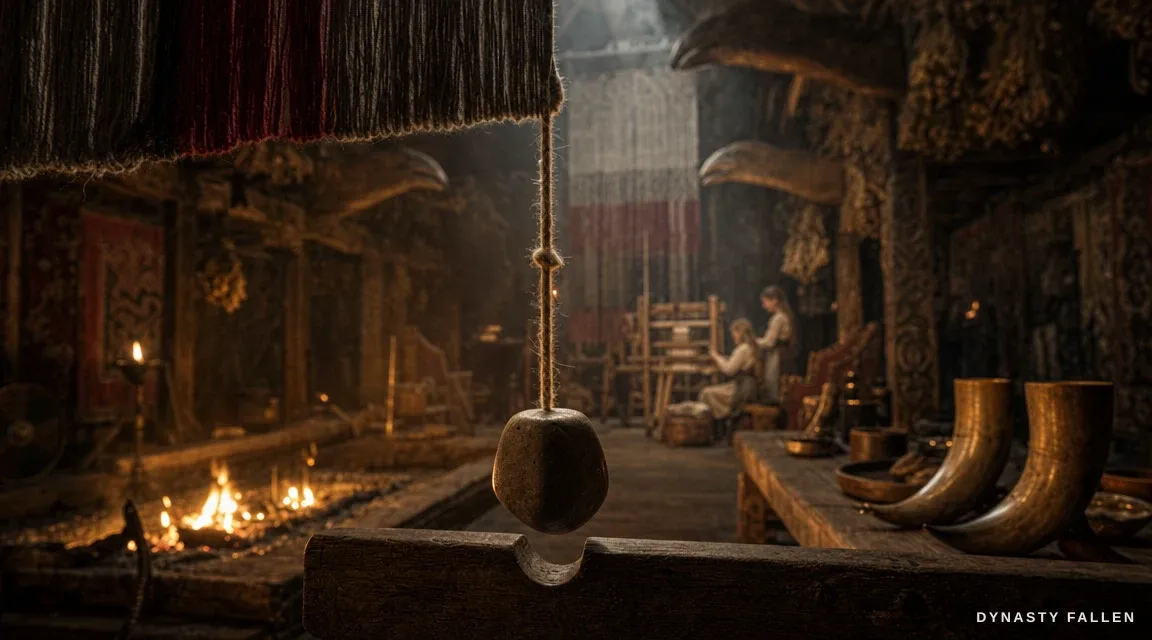
A Scandinavian queen, named Gunnhild in Norse sources and given a Danish royal lineage in the continental ones, was the wife of Erik Bloodaxe — last king of a united Norway under Harald Fairhair’s line, twice king of Northumbria at Jórvík. The marriage, the dynastic consequences, and the children attested as the Eríkssynir appear consistently across the Norse saga tradition (Heimskringla, Egils saga, Fagrskinna) and the continental Latin chronicles (Historia Norwegiae, Ágrip, Gesta Hammaburgensis).
The traditions disagree sharply on her origin (see claim 11 — the Sámi-frontier hut) and on the source of her later political power (claim 13 — the seiðr-at-distance), but her existence as Queen of Norway and exile-queen of Northumbria is bedrock. The sagas and the continental record see the same woman; they disagree only on what she was made of.
Erik Bloodaxe was twice Viking king of Northumbria at Jórvík. Gunnhild was his queen there.
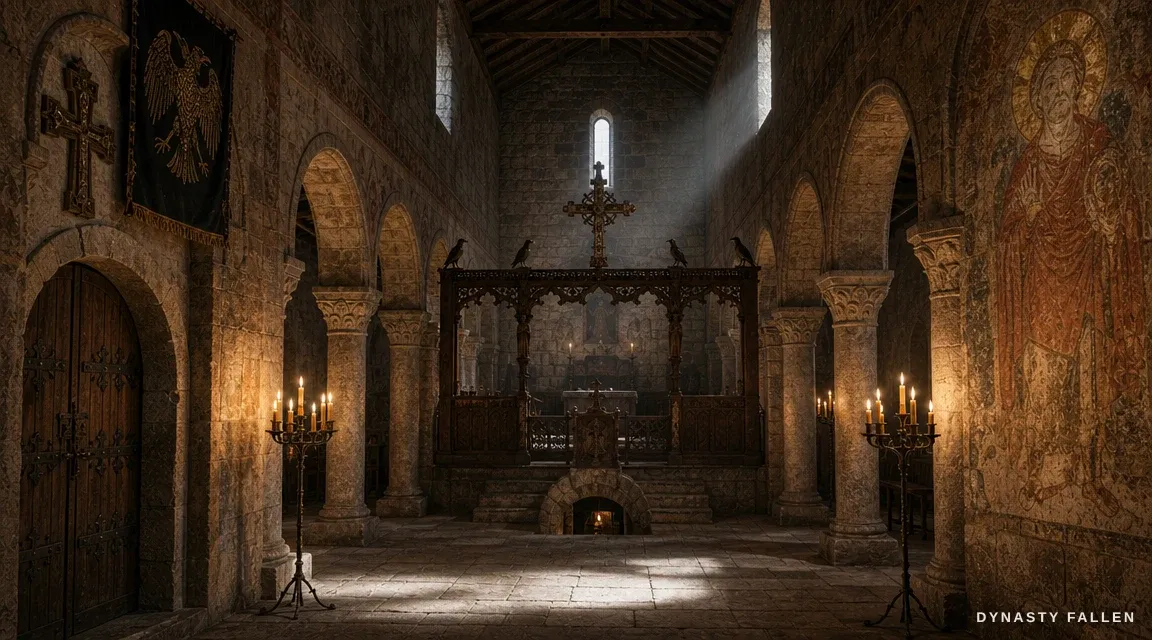
After Erik was driven from Norway in c. 947 by his half-brother Haakon the Good, he took the throne of the Viking kingdom of Jórvík (York) in northern England — twice, with a brief interregnum in between, the second period ending in 954. The Anglo-Saxon Chronicle records the entries directly. Roger of Wendover preserves the political detail in his Flores Historiarum. Norse sources, working independently from saga tradition, agree.
This is among the most reliably attested phases of Gunnhild’s life: she was present in Northumbria as the queen of an exiled Norwegian king ruling a Viking kingdom in Christian England — the unique geographic register the album works in Track 03 (“The Raven Above the Cross”). The political fact-base is independent of the saga witch-queen frame; the chronological frame for the Eríkssynir’s later return to Norway depends on Erik having ruled and died at Jórvík, which the English sources document.
Erik Bloodaxe was killed in an ambush at the Battle of Stainmore in 954.
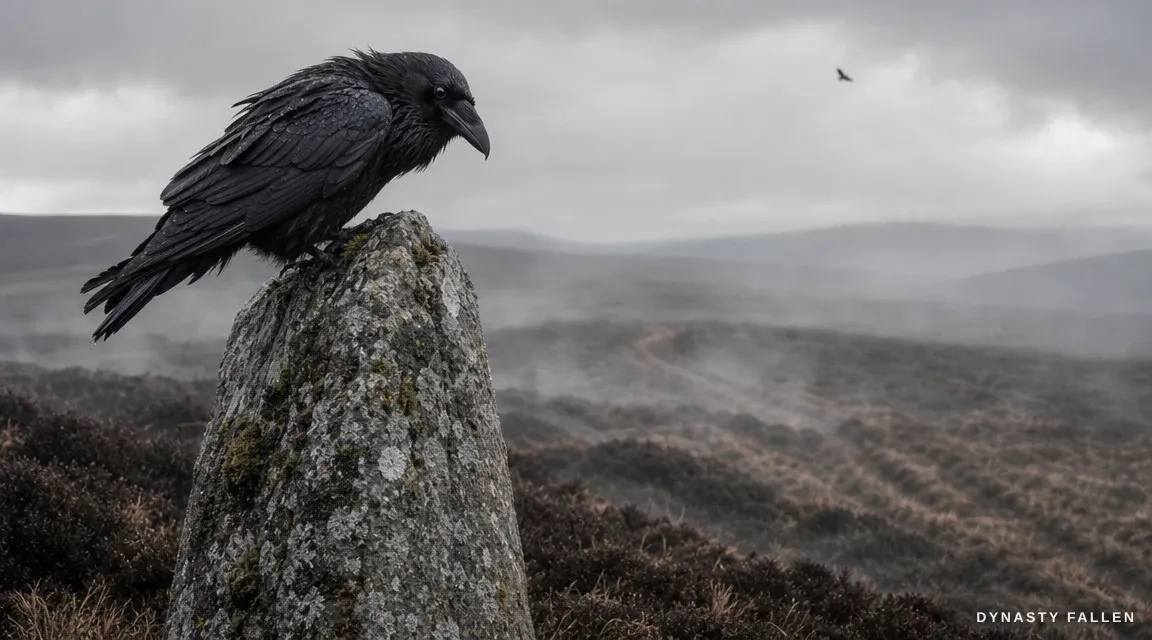
Erik fell in 954, ambushed on a Pennine ridge by Maccus son of Anlaf (likely a son of Olaf Sihtricsson, a rival Norse-Irish dynasty). Roger of Wendover names the killer; the Anglo-Saxon Chronicle’s entry for 954 confirms the year and the loss of the Northumbrian kingdom. Norse saga tradition agrees on the death and the locale, though it dramatises the ambush.
The Battle of Stainmore is the album’s Track 04 (“I Called the Wind Back”). Erik’s death is among the album’s bedrock historical events; everything in Acts II and III follows from it. The English sources are independent of the Norse witch-queen frame and agree with the saga on the bare political facts. The album narrativises Gunnhild’s perspective on a battle she was not at — a saga-licit move within documented constraints.
Gunnhild ruled Norway in fact through her son Harald Greycloak for nearly a decade (c. 961–970).
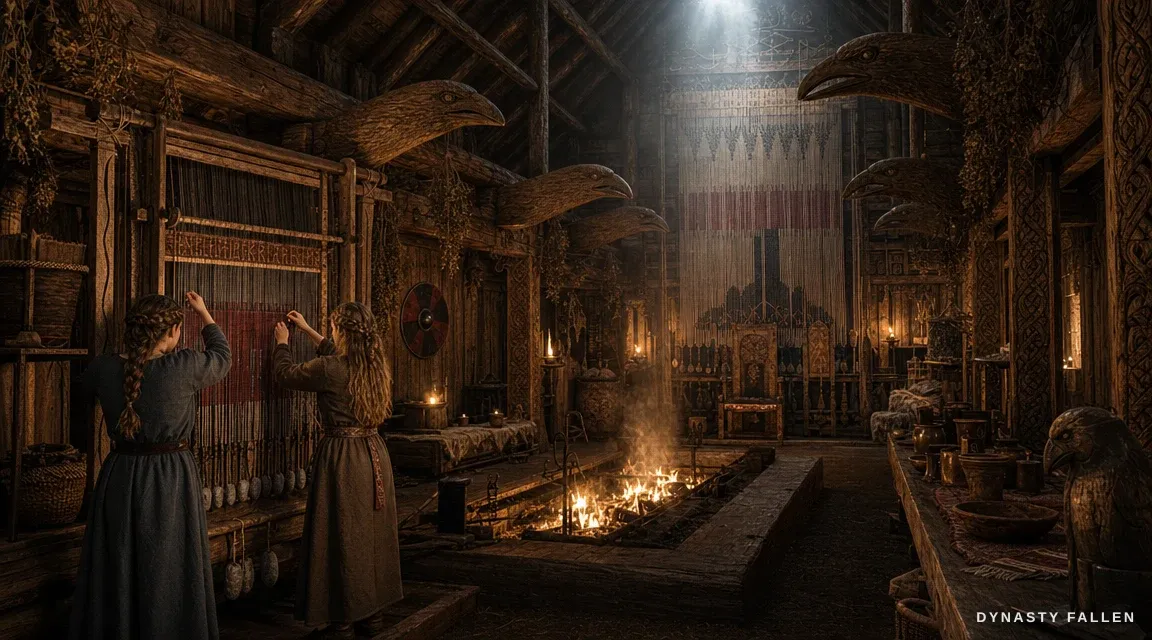
After the Battle of Fitjar c. 961, the Eríkssynir took the Norwegian throne and Harald Greycloak (Haraldr gráfeldr) was acclaimed king. The chroniclers — Norse, continental, and Christian — consistently report that he reigned only because his mother stood behind him, that her rule was harsh, and that effective authority lay with her rather than with the king of record. Norse saga tradition agrees with the more politically-flavoured Latin chronicles on this central fact.
What the sources also report — that she ruled by seiðr, killed men at distance, named the arrow at Fitjar — is the saga-tier material that gets its own claims below. But the political fact of Mother of Kings ruling-through-her-son is attested across independent traditions including hostile and Christian ones, which makes it among the best-documented claims about a tenth-century Scandinavian woman’s political power. The album’s central thesis — the throne she never sat was hers — sits on this documented bedrock.
The Eríkssynir were picked off one by one through the 960s and 970s by Hákon Sigurðsson Jarl.
After c. 970, Hákon Sigurðsson Jarl — Hákon jarl hinn ríki, the powerful jarl of Lade — moved against the Eríkssynir in coordination with Harald Bluetooth of Denmark, who had previously sheltered them. Harald Greycloak was lured to Denmark and killed there. His brothers were picked off one by one through the decade that followed. Norse and Danish sources agree on the broad arc; skaldic verses composed for Hákon Jarl preserve some of the specific kill-events with near-contemporary detail.
This is the album’s Act III opening — Track 07 (“Six Sons, Six Candles”), the count-down register. The killings as such are documented; what’s saga-tier is the specific role attributed to Gunnhild’s witchcraft in the chroniclers’ framing of why she couldn’t stop it. (See claim 13 on the seiðr-at-distance topos.) The album takes the documented timeline and lets the saga frame carry the grief.
From the sagas
Saga-only. Plausible, vivid, and unverifiable.Erik's men found her in a Sámi-frontier hut with two wizards who had been teaching her seiðr in exchange for her bed. She asked them to kill the wizards. They did. She rode south.

Snorri Sturluson, writing c. 1230 in Heimskringla, places the episode on a sea-raid Erik’s men make to Bjarmaland and the northern coast. They ride inland, find a young woman alone in a hut on the Finnmark / Sámi frontier with two Finnar (sorcerers), and she tells them she has been kept there to learn seiðr — she has been the wizards’ lover so they would teach her. She asks Erik’s men to kill the wizards in their sleep. They do. She rides south with them and becomes Erik’s queen.
This is a saga origin. It is the most dramatic version of Gunnhild’s beginning preserved anywhere, and it is also the version most likely to be Snorri’s literary invention. The continental tradition flatly contradicts it (see claim 13 below — the Danish-princess origin). No other Norse source predating Heimskringla corroborates the Sámi-hut version. The two wizards, the bedroll bargain, and the killing pattern are all narrative shapes that recur across saga literature when a male author wants to mark a powerful woman as dangerous from the beginning.
The album takes the Heimskringla version because it is the version that gave Gunnhild agency in her own origin — she chose, she set the terms, she had the wizards killed. The cautious historical version (a daughter is married to a king for diplomatic reasons) is true to the documented sources and emotionally inert. The Sámi-hut origin is true to the saga and emotionally load-bearing. Vol. IX is for the saga. The Track 01 cold open lands the origin within the first ninety seconds of the album.
The *valbǫst* — the rare, named arrow that killed Haakon the Good at Fitjar — was guided by Gunnhild's seiðr from her hall far away.
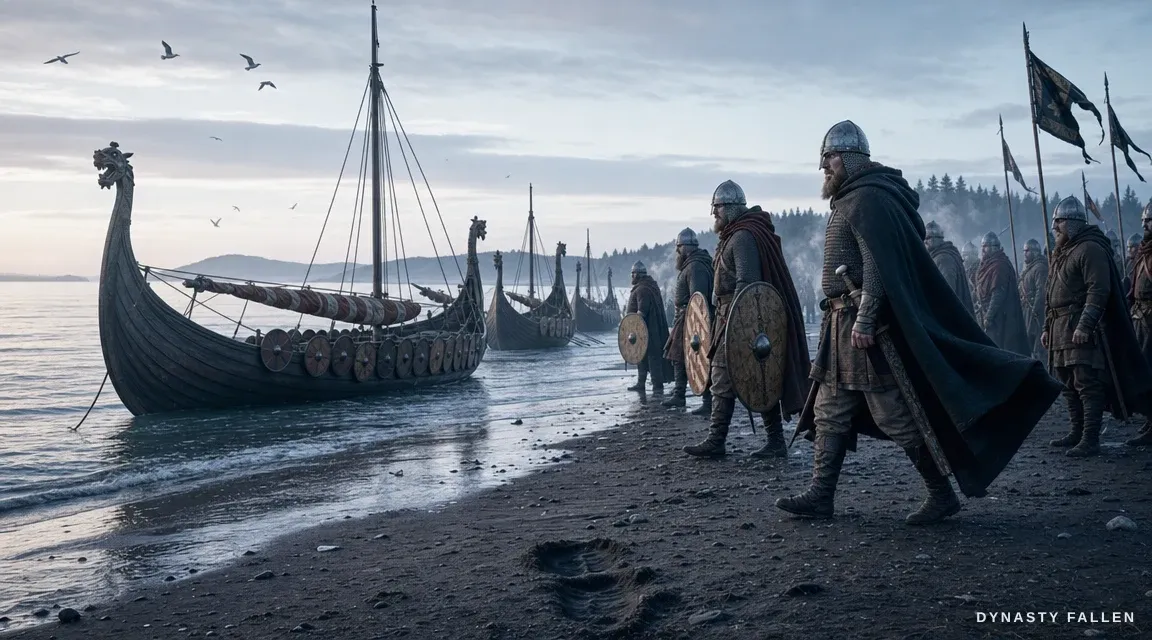
Haakon the Good won the Battle of Fitjar c. 961 against the Eríkssynir on the field — and then took an arrow under the arm during the rout, bled out on the ride home, and died at Hákonarhella on the Norwegian coast. The arrow itself, and the death-wound, are documented across Norse sources. Snorri’s Heimskringla names the arrow a valbǫst — a rare arrow, possibly a specialised type, the term itself uncommon enough that translators give it different valences (a “well-fletched” arrow, a “named” arrow, a “guided” arrow). The text and the surrounding narrative permit the implication that the wound was seiðr-guided — that Gunnhild, far away in her hall, had named the man and the arrow.
This is the album’s centerpiece (Track 05, “I Named the Arrow”). The saga frame the album takes is the witch-queen who curses the arrow from a hall the camera barely visits. What’s documented: Haakon died of that arrow wound, on that ride, from that battle. What’s saga: the seiðr-causation. The literal arrow killed him; the album lets Snorri’s frame name it.
A near-contemporary stone monument at Hákonarhella on the Norwegian coast preserves the death-site. The album renders it (Track 05’s outro). The arrow itself is gone — but the language Snorri used to describe it is part of why we remember Gunnhild as the woman who named it.
She killed men at distance by seiðr — the witch-queen as the chroniclers' explanation for her power.
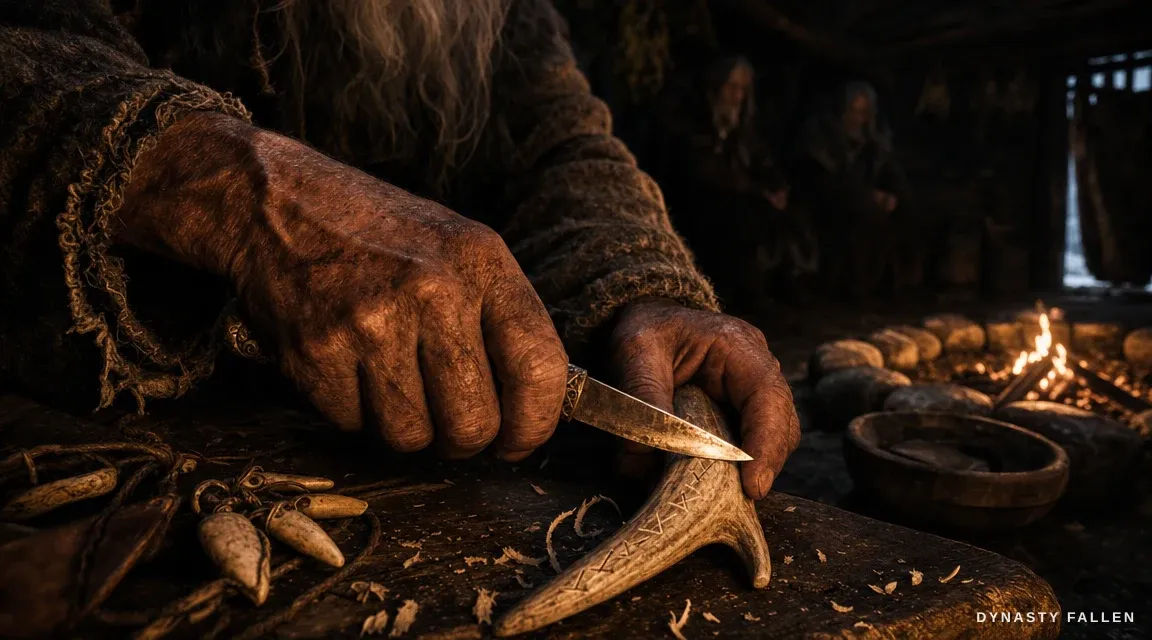
The chroniclers — Norse, continental, and Christian — consistently report that Gunnhild had men killed at distance by seiðr. This is multiply attested as a claim: Snorri reports it, Egils saga reports it (Thorolf’s death is alleged to her curse), the later Christian sources echo it. As medieval reports it is consistent. As history, modern scholarship reads it differently — as a thirteenth-century trope explaining a tenth-century woman’s actual political power.
The saga’s witch-queen frame and the modern political reading are not mutually exclusive. Both can be true: she may have practised seiðr in the form the period understood (Jesch, Women in the Viking Age, surveys the evidence for elite women practitioners), and her real power was political coordination of allies, sons, and the Eríkssynir’s war of return. The chroniclers reduced the second to the first because reducing women’s power to sorcery was the medieval male reflex.
The album takes the chroniclers’ frame at its strongest: she names men, she names arrows, the men die. Whether the seiðr was real, ritual, or rhetorical reconstruction is the question the listener gets to hold open. The album’s argument is that the woman doing the work was real either way.
Egil Skallagrímsson, escaping her court at York, carved a horse's head onto a hazel pole, planted it on a Norwegian skerry facing the mainland, and cursed Erik and Gunnhild in skaldic verse.
Egils saga preserves the most famous documented act of insult-magic in the Norse corpus. After escaping Gunnhild at York — the saga frames the escape as her actively hunting him through her seiðr — Egil lands on a Norwegian skerry, cuts down a hazel pole, carves a horse’s head onto the top, and plants the pole facing the mainland. He then chants a skaldic verse cursing Erik and Gunnhild and calling on the land-wights to drive them from the country until they avenge his exile. The form — the níðstǫng or níðingr stǫng, “nithing-pole” — is independently attested in the Norse legal corpus as a punishable form of insult-magic.
The saga is independent of Heimskringla. Egils saga gives us a second medieval witness to the witch-queen frame around Gunnhild — Egil and Gunnhild as the two great practitioners of curse-magic in their generation, locked in a feud the saga frames as the canon’s most famous skald against the canon’s most dangerous queen. The carving-act itself and the orientation of the pole are saga reconstruction; the verse preserved on the page is the closest thing we have to direct testimony.
The album’s Track 06 (“They Could Not Name Me Queen”) is built on this scene. The curse-duel structure is the album’s only direct head-to-head between Gunnhild and a named enemy who is not a king. The album takes both sides: Egil’s verse on the skerry, Gunnhild’s answer in the hall.
Harald Bluetooth lured Gunnhild to Denmark on a fake marriage offer and had her drowned in the peat bog at Haraldskær.
After her sons were dead and Hákon Jarl’s coordination with Harald Bluetooth had stripped her of allies, Harald Bluetooth — depending on the tradition: her brother in the continental version, her later executioner in any — is said to have sent for her with an offer of marriage. She rode south to Denmark. On arrival, the death-tradition says, she was taken to a peat bog at Haraldskær in Jutland and drowned at his order.
The single Norse source is Jómsvíkinga saga, written c. 1200 — roughly 220 years after the events and significantly later than the Heimskringla tradition. The story is then preserved in Danish folk legend through the medieval and early-modern centuries. There is no independent corroboration from continental, English, or earlier Norse sources. The death-tradition may be substantially accurate, or it may be the folk tradition’s way of finishing an unfinished story — the witch-queen had to end somewhere, and a bog death fit.
The album’s closer (Track 08, “Haraldskær”) takes the bog death. The slow doom collapse of the album’s last fifteen minutes is the album’s answer to the closer-track question: what does it sound like when a woman who named arrows and ruled kingdoms ends in dark water at the order of a man she has known her whole life? The death is saga-tier; the album commits to it. (For the nineteenth-century bog-body misidentification that briefly seemed to corroborate this, see claim 21 below — it does not corroborate.)
Legend & flourish
Where the saga becomes literature.The bog body discovered at Haraldskær in 1835 is Gunnhild.
In 1835, a well-preserved female bog body was discovered in the peat bog at Haraldskær in Jutland. A Danish royal commission, led by King Frederik VI’s enthusiasm for the saga tradition, identified the body as Gunnhild. The identification was accepted across Danish popular history for roughly 140 years. The body was placed in an oak sarcophagus and kept on display in St. Nicolai Church in Vejle as Dronning Gunnhild.
In 1977–1979, radiocarbon dating placed the body at approximately 490 BCE — fifteen hundred years before Gunnhild’s lifetime. The Haraldskær Woman, as she is now properly called, is an early Iron Age bog body, not a tenth-century queen. The identification was retracted; the modern label on the sarcophagus reflects the science.
The misidentification is preserved here because it shaped a century and a half of how Gunnhild was remembered. For most of the period from Romantic nationalism through the early twentieth century, Dronning Gunnhild and the Haraldskær Woman were the same body in popular memory. The saga death-tradition (claim 15 above) gave the body its name; the body gave the death-tradition its apparent confirmation; the modern dating dissolved the confirmation without dissolving the legend.
The album takes the bog death (saga-tier) and rejects the bog-body identification (modern-science-tier). Track 08 renders the Haraldskær bog faithfully and without the Iron Age woman.
The witch-queen Gunnhild is Snorri Sturluson's literary invention; the real Gunnhild was a Danish princess and a competent political queen.

A school of modern scholarship argues that the Heimskringla witch-queen is Snorri’s thirteenth-century literary invention — that the real Gunnhild was the daughter of Gorm the Old of Denmark and sister of Harald Bluetooth, as preserved in Historia Norwegiae, Ágrip, and the early continental record. On this reading, the Sámi-frontier hut, the seiðr, the named arrow, and the bog death are all later literary accretion; the documented Gunnhild was a political queen of unremarkable origin who happened to be unusually effective.
The continental sources are earlier than Heimskringla. They are also less detailed and less narratively organised. Whether to read Snorri’s witch-queen as the queen worth remembering or as the queen Snorri invented is a defensible question with no resolution forthcoming — the medieval sources will not settle into agreement.
The album rejects this reading editorially. Not because the modern scholarship is wrong (it may be right) but because the queen the cautious continental record preserves is unmemorable and the queen Snorri preserves is the one the album lives in. Vol. IX is for Snorri’s queen. The Truth & Legend page is here so the listener can hold the contrasting view alongside.
This is what “legend” means in the album’s stance: not “invented and dismissed” but “true to a tradition the album rejects in favour of a different one.” Either tradition might be closer to the historical Gunnhild. The album commits to one and tells you which.
The Gunnhild of fantasy literature, comic books, and prestige television is the historical Gunnhild.
Gunnhild has had an outsized afterlife in modern reception. Marvel Comics gave the name to a recurring Asgardian witch character. Tolkien’s seiðr-practising figures (Galadriel’s mirror-scrying, the Witch-king’s curse-magic) draw on the same Heimskringla witch-queen archetype that Snorri’s Gunnhild crystallised. The Vikings television series and its successor Vikings: Valhalla used her name (and an approximate biographical fragment) for a peripheral character. Across the reception, Gunnhild reads as a stock medieval-witch-queen — sometimes positioned as the original of the type.
The reception is not history. Each of these works engages a different fragment of the saga tradition and adds invented material to fill in what the saga left silent. The character named Gunnhild in Vikings is not the historical Gunnhild; the Galadriel-Gunnhild link is thematic, not genealogical; Marvel’s Gunnhild shares only the name.
The album works inside the saga frame Snorri established — not inside the modern fantasy reception that descended from it. The visual register of the album is documented tenth-century Norse-Scandinavian: turf-roofed longhouses, carved raven-head beams, the warp-weighted loom, the small rune-etched seax, the iron jewellery, the Hardanger landscape. There are no pointed hats, no green smoke, no levitating spell-effects. The witch-queen is a political witch-queen, not a fantasy one.
When the listener arrives at Vol. IX with a Marvel-Galadriel-Vikings expectation of what “the witch-queen of Norway” looks like, the album’s job is to give them, instead, what the saga actually preserves: a woman in a longhouse who names men and waits.
A note on stance
Why the album holds the position it does
History writes most of these women out. The sagas write them in — sometimes invented, sometimes amplified, sometimes preserving a fragment of contemporary belief that survived the centuries. The album takes the saga seriously not because it is the most accurate version of events, but because it is the version that preserved a queen at all who ruled a kingdom for nearly a decade without sitting on its throne.
If you want the cautious historical Gunnhild, she was a Danish princess, married a Norwegian king, bore six sons who returned to take the throne, and ruled Norway through her son Harald Greycloak for nearly a decade. If you want Snorri’s Gunnhild, she came out of a Sámi-frontier hut with the bedrolls of two dead wizards behind her, married Erik, killed men at distance by seiðr, named the arrow that killed Haakon the Good at Fitjar, fought Egil Skallagrímsson in a curse-duel that crossed the North Sea, watched her sons die one by one, and was lured to a Danish bog by Harald Bluetooth on a fake marriage offer.
Vol. IX is for Snorri’s Gunnhild. This page is so you can hold both at once.
Sources & further reading
What the album draws from, and modern scholarship for digging deeper.Primary sources
- Heimskringla
The principal source. Gunnhild appears across Haralds saga hárfagra, Hákonar saga góða, and Haralds saga gráfeldar. The Sámi-hut origin, the Northumbrian exile, the named arrow at Fitjar, and the rule-by-curse all come from Snorri. Written ~270 years after the events from earlier oral and skaldic tradition.
- Egils saga Skallagrímssonar
Independent of Heimskringla. Preserves the lifelong Egil–Gunnhild feud, including the killing of Rögnvald, the alleged curse on Thorolf, and the níðstǫng on the Norwegian skerry — the most famous documented act of insult-magic in the Norse corpus.
- Fagrskinna
A short Norwegian regnal chronicle that predates Heimskringla by roughly a decade. Useful for triangulating where Snorri added drama versus where he was working from earlier saga material.
- Ágrip af Nóregskonungasǫgum
Norwegian Latin–derivative regnal chronicle. Gives the continental origin tradition: Gunnhild as daughter of Gorm the Old of Denmark, sister of Harald Bluetooth. Predates Heimskringla by ~40 years.
- Historia Norwegiae
Latin chronicle of the Norwegian kings. The principal source for the Danish-princess origin. Contradicts Heimskringla flatly on Gunnhild’s parentage.
- Jómsvíkinga saga
Preserves the death-tradition: Harald Bluetooth lures Gunnhild south on a fake marriage offer and drowns her in the bog at Haraldskær. A single saga source for the bog death, written ~250 years after the events.
- Gesta Hammaburgensis Ecclesiae Pontificum
Continental, the closest to near-contemporary. Knows the political marriage between Norway and Denmark without the witchcraft. Source-critical bedrock for the Danish-princess reading.
- Flores Historiarum
The principal English source for Erik Bloodaxe’s death in the ambush at Stainmore in 954, naming Maccus son of Anlaf as the killer.
- Anglo-Saxon Chronicle
Short notices on Erik’s two periods as Viking king of Northumbria at Jórvík. Contemporary or near-contemporary entries; the political fact-base independent of Norse saga.
- Skaldic verses on the Eríkssynir
Court poetry composed during and shortly after the events. The closest thing to eyewitness testimony on Erik’s sons and the wars of return.
Modern scholarship
- Heimskringla
The current scholarly English translation. Replaces the older Laing (1844) and Hollander (1964) renderings. Free open-access PDFs.
- Egil’s Saga
The standard modern English Egils saga. Includes the níðstǫng episode (ch. 57) in clear contemporary English with translator’s notes on the verse and the curse-magic context.
- Women in the Viking Age
The standard scholarly survey of women’s social, political, and religious roles in Viking-age Scandinavia. Specifically discusses the seiðr-mistress / völva archetype and the source-critical problems with attributing such powers to historical queens.
- The Growth of the Medieval Icelandic Sagas (1180–1280)
The standard work on how saga tradition shaped — and in places invented — the figures it preserved. Useful for sorting what Snorri made up from what he inherited.
- From Viking Stronghold to Christian Kingdom: State Formation in Norway
The standard modern political history of tenth- and eleventh-century Norway. Sets Gunnhild and the Eríkssynir in the political context Heimskringla narrativises.
- A History of the Vikings
Still the best single-volume narrative history of the Viking age in English. Treats Gunnhild in the political register without dismissing the saga material.
Read online
- Heimskringla (Laing translation)
The Laing translation is dated and stylistically Victorian, but it is free, complete, and online.
sacred-texts.com → - Heimskringla (Finlay & Faulkes)
The scholarly translation, released as free PDFs by the Viking Society. The current canonical English Heimskringla.
vsnrweb-publications.org.uk → - Egils saga (Icelandic Saga Database)
The Old Norse Egils saga alongside Eddison’s 1930 English translation. Useful for verifying skaldic verse passages in the original.
sagadb.org → - Wikipedia — Gunnhild, Mother of Kings
For a quick overview and a hyperlinked entry into the source-critical debate.
en.wikipedia.org →
Citations on individual claims above point to specific chapters and editions. The list here is the broader context — what to read next if you want to follow the queen out of the song and into the historical record.