What this song renders
Snorri's account is brief and vivid. After the feast, the suitors and their men were lodged in a separate hall on Sigrid's grounds. At night, by her order, the hall was barred from outside and set on fire. Vissavald, Harald Grenske, and their retinues burned. Snorri attributes the explanation to Sigrid herself: she did this to teach petty kings not to come wooing.
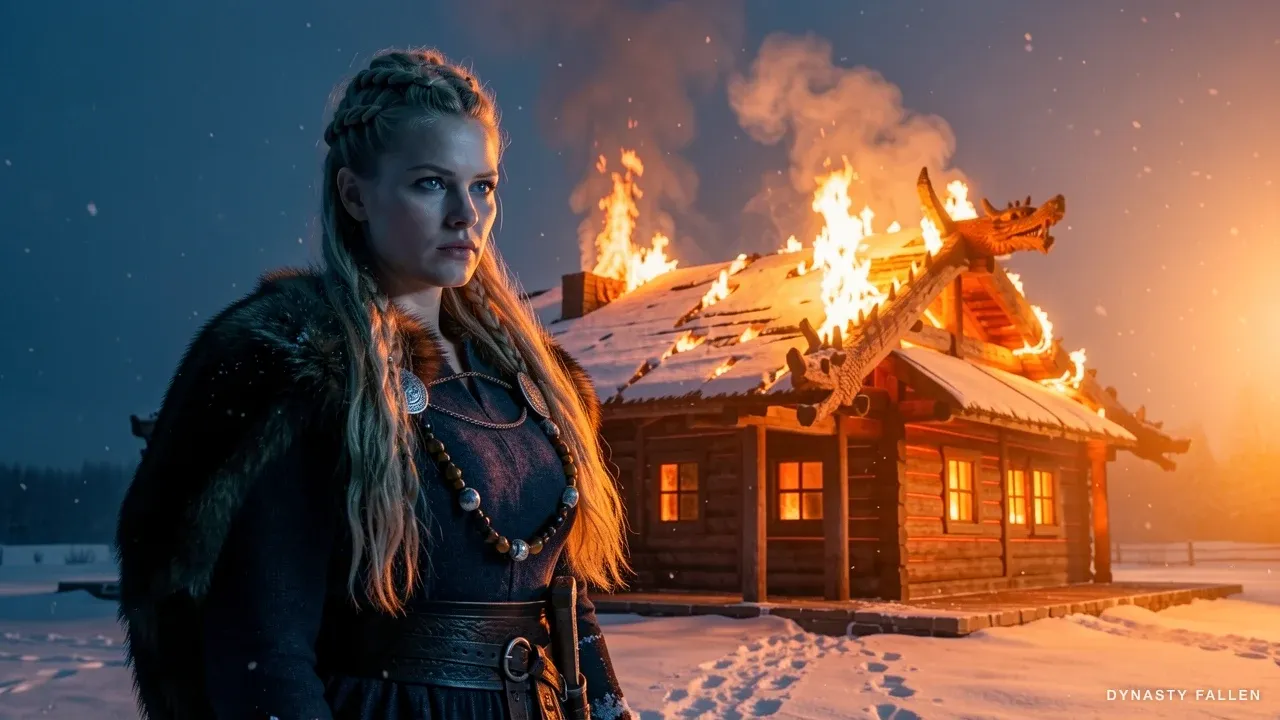
The song renders the act in three movements that mirror the saga's compression. The bar dropping (the locking of the door from outside, an irrevocable act), the fire taking (the burning, here amplified into the album's first wall-of-sound peak), and the morning after — Sigrid surveying the wreckage in the snow, neither triumphant nor remorseful. The bridge's half-time drop is the morning.
Whether the burning happened at all is the central question of Sigrid's historiography. Heimskringla is the only source. Modern historians read it variously — as apocrypha invented to explain her epithet, as a literary dramatisation of a real political incident, or as legend pure. The album takes Snorri at his word; this page is honest about where his word stands.
Saga-only. The single most-disputed episode in Sigrid's record, and the one the album treats as load-bearing. No earlier or independent source confirms it.